

My Garage
My Account
Cart
This part fits
2004 Toyota Sienna (VIN: 5TDBA23C14S027752) United States Of America; 6 Cyl 3.3L DOHC EFI; Wagon; LE; Automatic Transmission; 5 Door; 7 Seater; MCL25L-PFAEKA
Check another vehicle- Fitting Vehicle Options: 3MZFE.. MCL2#
Toyota 25052-20190 No.2 Exhaust Manifold Converter Sub-Assembly
2003-2007 Toyota 2505220190
Customer Questions & Expert Answers (10)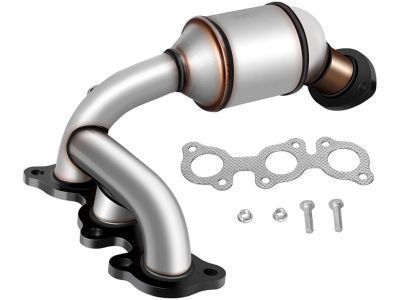
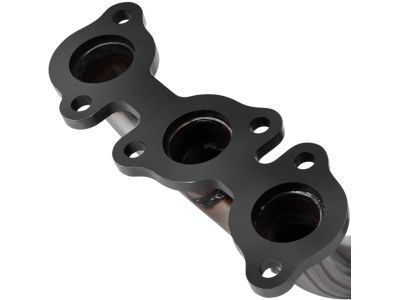
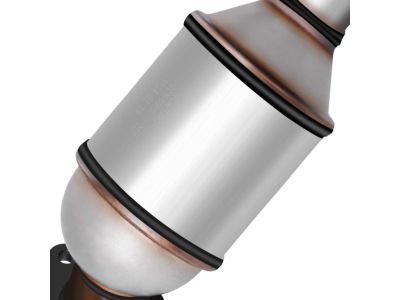
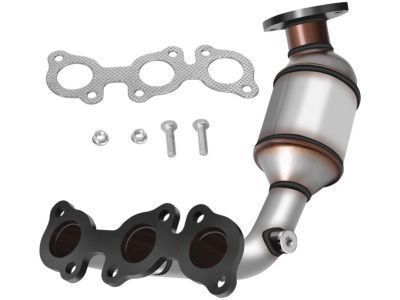
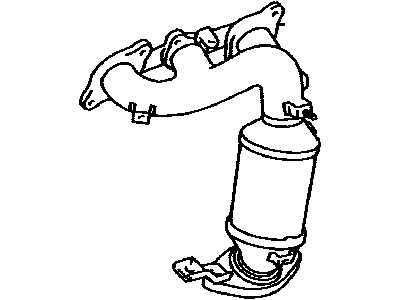
- Part DescriptionConverter Sub-Assy, Exhaust Manifold, No.2
- *115=TOYOTA/03-/Y
- Part Name Code25052
- ManufacturerToyota
This part fits
2004 Toyota Sienna (VIN: 5TDBA23C14S027752) United States Of America; 6 Cyl 3.3L DOHC EFI; Wagon; LE; Automatic Transmission; 5 Door; 7 Seater; MCL25L-PFAEKA
Check another vehicle- Fitting Vehicle Options: 3MZFE.. MCL2#
$675.85 MSRP: $858.22
You Save: $182.37 (22%)
Ships in 1-3 Business Days
1
- Related Parts
- Product Specifications
- Customer Questions & Expert Answers
Product Specifications
Brand Genuine Toyota Part Name Code 25052 Manufacturer Part Number 25052-20190 Part Description Converter Sub-Assy, Exhaust Manifold, No.2 Other Names Exhaust Manifold, Manifold Item Dimensions 28.6 x 18.6 x 7.7 inches Item Weight 15.50 Pounds Condition New Fitment Type Direct Replacement Manufacturer Toyota SKU 25052-20190 Warranty This genuine Toyota part is guaranteed by Toyota's factory warranty. Shipping & Return Shipping Policy Return Policy Warning: California's Proposition 65Customer Questions & Expert Answers
- Q:I just want to confirm I'm purchasing a correct part before placing an order Posted by ToyotaPartsDeal Specialist
- A:You can Select Your Vehicle to check if 25052-20190 fits your vehicle.Posted by ToyotaPartsDeal Specialist
- Q:How to remove and reinstall exhaust manifolds in 3.0L and 3.3L V6 engine on Toyota Sienna? Posted by Customer
- A:Disconnect the negative cable from the battery, then remove the exhaust manifold heat shield by detaching it from the exhaust manifold after removing the bolts, and spray penetrating oil on the exhaust manifold fasteners to allow it to soak in. Next, remove the heated oxygen sensors from the front and rear manifolds, followed by the EGR pipe from the rear exhaust manifold and cylinder head. Remove the nuts retaining the exhaust pipes to the front and rear exhaust manifolds, as well as the exhaust manifold braces from the block, including the support bracket and the two nuts at the exhaust pipe/manifold joint. Disconnect the electrical connector from the oxygen sensor at each manifold, then unbolt the exhaust manifolds from the cylinder heads and slip them off the mounting studs, noting that the rear exhaust manifold bolts are difficult to access and may require a long, flexible extension on your ratchet. Carefully inspect the manifolds and fasteners for cracks and damage, and use a scraper to remove all traces of old gasket material and carbon deposits from the mating surfaces of the manifolds and cylinder head. If the gasket was leaking, check the manifolds for warpage on the cylinder head mounting surface by placing a straightedge over the surface and trying to insert a feeler gauge; if the clearance exceeds the limit, have the manifold resurfaced at an automotive machine shop. Position new gaskets over the cylinder head studs, install the manifolds, and thread the mounting nuts into place, tightening them from the center out. Reinstall the remaining parts in the reverse order of removal, using new gaskets when connecting the exhaust pipes, and finally, run the engine to check for exhaust leaks.Posted by ToyotaPartsDeal Specialist
- Q:What is the general description and maintenance procedure for a catalytic converter on Toyota Sienna? Posted by Customer
- A:For models from 2001 through 2006, the catalytic converter is an emission control device in the exhaust system designed to reduce pollutants, with two types available: a conventional oxidation catalyst and a three-way catalyst. These models feature three catalytic converters, including a warm-up three-way catalytic converter integrated into the front exhaust manifold and another in the pipe from the rear manifold, with the main exhaust pipe housing the final converter. Testing for a malfunctioning converter requires sophisticated equipment, so it's advisable to consult a dealer or authorized emissions inspection facility. During servicing, inspect the converter for leaks, corrosion, and damage, ensuring to check the welds and flange bolts; any damage necessitates replacement. Although failures are rare, plugged converters can occur, and a vacuum gauge can help diagnose restrictions in the exhaust system. To check for a restricted converter, connect a vacuum gauge to an intake manifold vacuum source, warm the engine, and record vacuum readings at idle and after throttle tests. If the final reading is significantly lower than the idle reading, a restriction may exist. For replacement, note that warm-up converters cannot be replaced separately; spray the exhaust flange studs with penetrating oil before removal, disconnect the flange at the rear, and cut the front connection to remove the converter, with installation following the reverse order of removal.Posted by ToyotaPartsDeal Specialist
- Q:This is the firewall side, correct? P4020 Posted by Customer: 2005 Toyota Sienna
- A:YES, THAT IS THE FIREWALL SIDE.Posted by ToyotaPartsDeal Specialist 1/7/2025
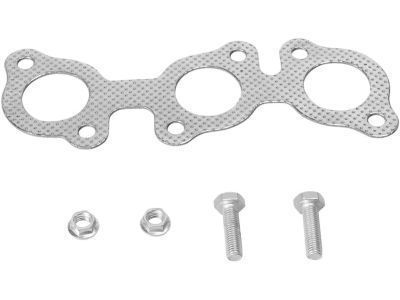
- Q:Which gaskets do I need to purchase for this part? Posted by Customer: 2006 Toyota Highlander
- A:17173-20030 90080-43036Posted by ToyotaPartsDeal Specialist 28/3/2025
- Q:Just confirming that this comes with the cylinder head to exhaust manifold gasket Posted by Customer: 2005 Toyota Highlander
- A:THIS DOES NOT COME WITH GASKETSPosted by ToyotaPartsDeal Specialist 12/7/2023
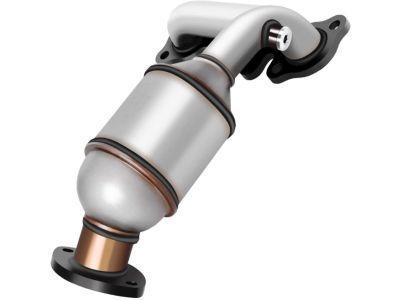
- Q:i just wanted to know if the actual cat converter is located towards more in the back of this specific part. Posted by Customer: 2004 Toyota Sienna
- A:NO THE COVER IS RIGHT IN FRONT OF THIS PARTPosted by ToyotaPartsDeal Specialist 6/9/2022
- Q:is this piece for the Front exhaust? Posted by Customer: 2004 Toyota Sienna
- A:YESPosted by ToyotaPartsDeal Specialist 5/9/2022
- Q:Is this part CARB compliant? Posted by Customer: 2005 Toyota Sienna
- A:yes it isPosted by ToyotaPartsDeal Specialist 13/7/2022
- Q:I want to know if this is from the driver's side. Posted by Customer: 2004 Toyota Sienna
- A:IT IS DRIVERSPosted by ToyotaPartsDeal Specialist 3/8/2021
If you have any questions about this product, please don't hesitate to ask us. We will be happy to help you!- Q:
Why choose Toyota Parts Deal
- Dedicated Service
Your complete satisfaction is our #1 goal
- Lowest Prices
Best deals on genuine OE parts from dealerships
- Fast Delivery
Orders are processed and delivered promptly