

My Garage
My Account
Cart
Genuine 2006 Toyota Tacoma Car Batteries
Auto Battery- Select Vehicle by Model
- Select Vehicle by VIN
Select Vehicle by Model
orMake
Model
Year
Select Vehicle by VIN
For the most accurate results, select vehicle by your VIN (Vehicle Identification Number).
3 Car Batteries found
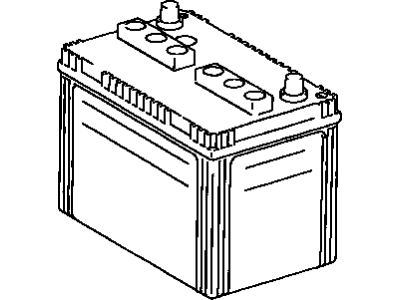 Product Specifications
- Part Name Code: 28800
- Condition: New
- Fitment Type: Direct Replacement
- SKU: 28800-03044
- Warranty: This genuine Toyota part is covered by warranty.
- Product Specifications
- Part Name Code: 28800
- Condition: New
- Fitment Type: Direct Replacement
- SKU: 28800-07010
- Warranty: This genuine Toyota part is covered by warranty.
 Product Specifications
- Part Name Code: 28800
- Condition: New
- Fitment Type: Direct Replacement
- SKU: 28800-0F020
- Warranty: This genuine Toyota part is covered by warranty.
2006 Toyota Tacoma Car Batteries
With ToyotaPartsDeal.com, you have access to an extensive inventory of genuine 2006 Toyota Tacoma Car Batteries, all priced competitively. Feel secure in your purchase, as all our OEM 2006 Toyota Tacoma Car Batteries are covered by warranty. Plus, we offer a hassle-free return policy and speedy delivery service.
2006 Toyota Tacoma Car Batteries Parts Questions & Experts Answers
- Q:How Can Car Batteries Be Accurately Tested and Replaced for the 2006 Toyota Tacoma?Posted by Atlas A.A:A battery cannot be both loaded and unloaded at the same time, that is, it has to be fully charged before it can adequately be tested. Disconnect the negative battery cable and perform the following tests: the indicator eye located on top of the battery should be lightly illuminated; if black, one should charge the battery. For battery types that have easily removable caps, check on the level of the electrolyte solution and in case it is below the uppermost point of the plates, then add distilled water without over flooding the same. To check the density of the electrolyte, dip a hydrometer and maintain the specific gravity around 1.270 at 68 degrees F Indeed, use a digital volt meter to conduct an open circuit voltage examination; fully charged battery must register 12.6 volts and above. An examination of battery condition entails the use of a load tester, which determines the battery's performance under high amperes; the voltage reading should not drop below 9.6 even when held at 15 seconds. Regarding Battery Drain Test, turn off all the accessories and connect a digital ammeter to the negative battery cable and post, the normal battery Drain should be 100 milli amperes or less. The basic procedure of replacing the battery is to disconnect the negative terminal first and connect it last to avoid short circuit. Disconnect both the negative and the positive batteries and unbolt the battery compartment cover and then withdraw the battery slowly. Check from the battery tray and clean it if you see that it has developed corrosion. If replacing, make sure the new battery is as close a match as possible to the old one, make sure the hold down strap is tight and connect the positive terminal first followed by the negative terminal.Answered by Toyota Parts Specialist Jerry / Mar 04, 2025