

My Garage
My Account
Cart
Genuine 2008 Toyota Solara Car Batteries
Auto Battery- Select Vehicle by Model
- Select Vehicle by VIN
Select Vehicle by Model
orMake
Model
Year
Select Vehicle by VIN
For the most accurate results, select vehicle by your VIN (Vehicle Identification Number).
2 Car Batteries found
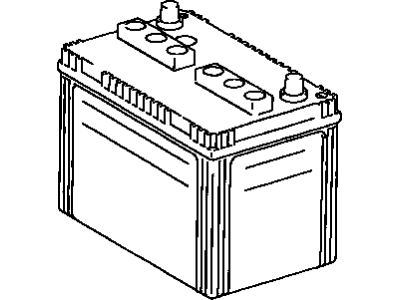 Product Specifications
- Part Name Code: 28800
- Condition: New
- Fitment Type: Direct Replacement
- SKU: 28800-03044
- Warranty: This genuine Toyota part is covered by warranty.
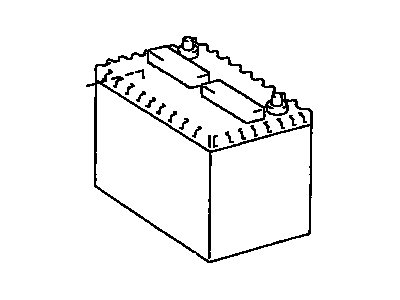 Product Specifications
- Part Name Code: 28800
- Item Weight: 1.40 Pounds
- Condition: New
- Fitment Type: Direct Replacement
- SKU: 28800-AA041
- Warranty: This genuine Toyota part is covered by warranty.
2008 Toyota Solara Car Batteries
With ToyotaPartsDeal.com, you have access to an extensive inventory of genuine 2008 Toyota Solara Car Batteries, all priced competitively. Feel secure in your purchase, as all our OEM 2008 Toyota Solara Car Batteries are covered by warranty. Plus, we offer a hassle-free return policy and speedy delivery service.
2008 Toyota Solara Car Batteries Parts Questions & Experts Answers
- Q:How to Check and Replace Car Batteries for the 2008 Toyota Solara?Posted by Shahrouz A.A:Disconnect the negative battery cable followed by the positive cable from the battery. Check the battery state of charge by visually inspecting the indicator eye on the top; if it appears black, charge the battery. Perform an open voltage circuit test using a digital voltmeter by touching the black probe to the negative terminal and the red probe to the positive terminal; a fully charged battery should read at least 12.6 volts, depending on the outside air temperature. Remove the battery's surface charge by turning on the high beams for ten seconds, then turning them off and letting the vehicle stand for two minutes. With the engine and all accessories off, measure the voltage again; if it is below 12.6 volts, charge the battery before conducting a load test. For the load test, use a battery load tester to evaluate the battery's ability to operate the starter and accessories under heavy amperage draw. Install the load-testing tool onto the terminals and follow the manufacturer's instructions, maintaining the load for 15 seconds or less while ensuring the voltage does not drop below 9.6 volts. If the battery condition is weak or defective, the tool will indicate this. Cold temperatures may lower the minimum voltage requirements, so adjust accordingly. To replace the battery, disconnect the negative cable followed by the positive cable, remove the hold-down clamp, and lift out the battery carefully. Inspect the battery tray for corrosion; if present, detach the bolts and clean the tray to prevent further corrosion. Ensure the replacement battery matches the original in dimensions, amperage rating, and cold cranking rating, and install it by reversing the removal steps.Answered by Toyota Parts Specialist Bruce / Sep 18, 2022
