

My Garage
My Account
Cart
Genuine 2008 Toyota Tacoma Axle Shaft
Car Axle Shaft- Select Vehicle by Model
- Select Vehicle by VIN
Select Vehicle by Model
orMake
Model
Year
Select Vehicle by VIN
For the most accurate results, select vehicle by your VIN (Vehicle Identification Number).
5 Axle Shafts found
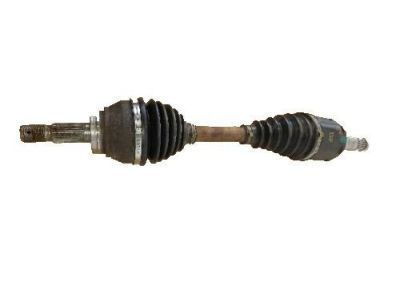
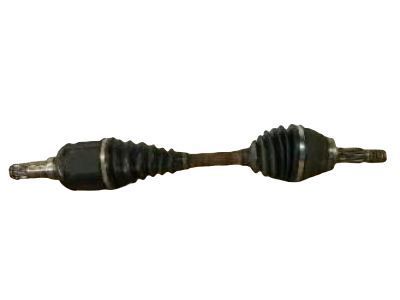
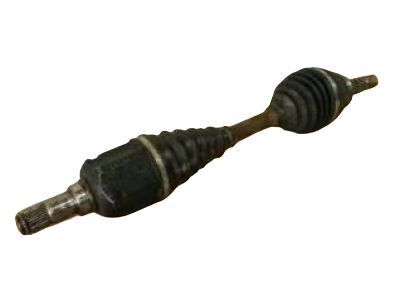
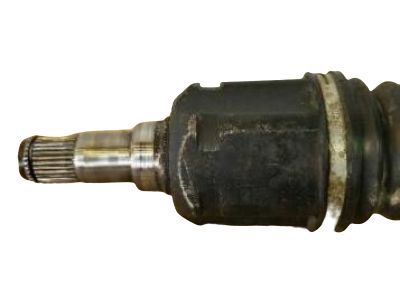
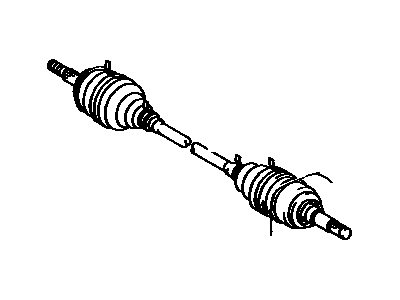
2008 Toyota Tacoma Shaft Assembly
Part Number: 43430-04070$337.55 MSRP: $484.02You Save: $146.47 (31%)Product Specifications- Other Name: Shaft Assembly, Front Drive
- Position: Front Driver Side
- Replaced by: 43430-04071
- Item Weight: 23.00 Pounds
- Item Dimensions: 30.4 x 5.2 x 5.2 inches
- Condition: New
- Fitment Type: Direct Replacement
- SKU: 43430-04070
- Warranty: This genuine Toyota part is covered by warranty.


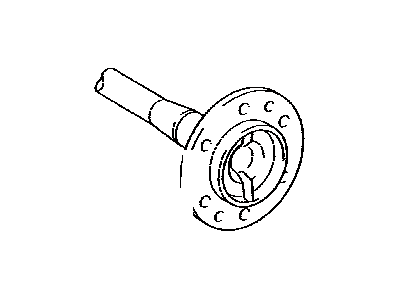
2008 Toyota Tacoma Shaft
Part Number: 42311-04081$393.58 MSRP: $587.15You Save: $193.57 (33%)Ships in 1-2 Business DaysProduct Specifications- Other Name: Shaft, Rear Axle
- Position: Rear
- Replaced by: 42311-04082
- Item Weight: 20.80 Pounds
- Item Dimensions: 49.0 x 12.2 x 12.5 inches
- Condition: New
- Fitment Type: Direct Replacement
- SKU: 42311-04081
- Warranty: This genuine Toyota part is covered by warranty.

2008 Toyota Tacoma Shaft
Part Number: 42311-04080$393.58 MSRP: $587.15You Save: $193.57 (33%)Ships in 1-3 Business DaysProduct Specifications- Other Name: Shaft, Rear Axle
- Position: Rear
- Replaced by: 42311-04082
- Item Weight: 1.40 Pounds
- Item Dimensions: 27.9 x 8.3 x 7.6 inches
- Condition: New
- Fitment Type: Direct Replacement
- SKU: 42311-04080
- Warranty: This genuine Toyota part is covered by warranty.
- Product Specifications
- Other Name: Shaft, Rear Axle; Axle Shaft
- Position: Rear
- Replaces: 42311-04070
- Item Weight: 16.10 Pounds
- Item Dimensions: 27.6 x 8.4 x 7.6 inches
- Condition: New
- Fitment Type: Direct Replacement
- SKU: 42311-04071
- Warranty: This genuine Toyota part is covered by warranty.
2008 Toyota Tacoma Shaft
Part Number: 42311-04070$411.42 MSRP: $613.76You Save: $202.34 (33%)Ships in 1-3 Business DaysProduct Specifications- Other Name: Shaft, Rear Axle
- Position: Rear
- Replaced by: 42311-04071
- Item Weight: 15.30 Pounds
- Item Dimensions: 28.7 x 8.4 x 7.5 inches
- Condition: New
- Fitment Type: Direct Replacement
- SKU: 42311-04070
- Warranty: This genuine Toyota part is covered by warranty.
2008 Toyota Tacoma Axle Shaft
With ToyotaPartsDeal.com, you have access to an extensive inventory of genuine 2008 Toyota Tacoma Axle Shaft, all priced competitively. Feel secure in your purchase, as all our OEM 2008 Toyota Tacoma Axle Shaft are covered by warranty. Plus, we offer a hassle-free return policy and speedy delivery service.
2008 Toyota Tacoma Axle Shaft Parts Questions & Experts Answers
- Q:What is the description and function of the rear axle shaft for the 2008 Toyota Tacoma?Posted by Iuliia N.A:The rear axle assembly is a hypoid, semi-floating type, the outer rear wheel of turns more fast as compared to the inner wheel when it is in cornering, with axleshafts splined to the side gears of differential. Some models feature an electronic locking rear differential, which operates in two modes: normal and locked and the latter engages when when there is mud or deep snow causing one wheel to spin. On the 4WD models, there will be a fully floating front axle assembly, best described as a differential and drive axles contain constant velocity joints. In diagnosing an axle problem, it is mandatory to look for other possible origins of noise since road noise, tire noise, and engine/transmission noises could be mistaken for axle noise. Hearing road noise does not vary with the power of the vehicle while tire noise is due to the state of the tires. Another method of solving this problem is to identify the main components that make the engine and the gearbox noisy; the tachometer is used to track the engine speed, and further tests are conducted with the car in Neutral. Changing the differential demands specific tools, thus, it may not be changed by the owner of the vehicle; details of removing the axels haft, replacing the oil seal, and replacing the bearings are provided, while other complicated procedures should be done by a mechanic.Answered by Toyota Parts Specialist Jerry / Mar 09, 2025
Related 2008 Toyota Tacoma Parts
 2008 Toyota Tacoma Wheel Seal
 2008 Toyota Tacoma Wheel Bearing
 2008 Toyota Tacoma Transmission Pan
 2008 Toyota Tacoma Torque Converter
 2008 Toyota Tacoma Input Shaft Bearing
 2008 Toyota Tacoma Output Shaft Bearing
 2008 Toyota Tacoma Pinion Washer