

My Garage
My Account
Cart
Genuine 2018 Toyota RAV4 Wheel Hub
Wheel Axle Hub- Select Vehicle by Model
- Select Vehicle by VIN
Select Vehicle by Model
orMake
Model
Year
Select Vehicle by VIN
For the most accurate results, select vehicle by your VIN (Vehicle Identification Number).
6 Wheel Hubs found


2018 Toyota RAV4 Hub Bearing
Part Number: 43550-0R020$282.56 MSRP: $405.18You Save: $122.62 (31%)Ships in 1-3 Business DaysProduct Specifications- Other Name: Hub & Bearing Assembly; Front Hub Bearing, Hub, Hub Assembly
- Position: Front Passenger Side
- Replaces: 43550-42020
- Item Weight: 10.50 Pounds
- Item Dimensions: 7.2 x 7.4 x 7.1 inches
- Condition: New
- Fitment Type: Direct Replacement
- SKU: 43550-0R020
- Warranty: This genuine Toyota part is covered by warranty.


2018 Toyota RAV4 Hub Subassembly Axle
Part Number: 43550-42020$282.56 MSRP: $405.18You Save: $122.62 (31%)Ships in 1 Business DayProduct Specifications- Other Name: Hub & Bearing Assembly
- Position: Front Passenger Side
- Replaced by: 43550-0R020
- Item Weight: 3.30 Pounds
- Item Dimensions: 8.2 x 8.4 x 8.4 inches
- Condition: New
- Fitment Type: Direct Replacement
- SKU: 43550-42020
- Warranty: This genuine Toyota part is covered by warranty.


2018 Toyota RAV4 Hub Assembly
Part Number: 42410-0R010$258.55 MSRP: $370.75You Save: $112.20 (31%)Ships in 1-3 Business DaysProduct Specifications- Other Name: Hub & Bearing Assembly; Hub & Bearing Assembly, Hub Assembly
- Position: Rear Passenger Side
- Replaces: 42410-42040
- Item Weight: 2.70 Pounds
- Item Dimensions: 7.1 x 7.0 x 4.6 inches
- Condition: New
- Fitment Type: Direct Replacement
- SKU: 42410-0R010
- Warranty: This genuine Toyota part is covered by warranty.


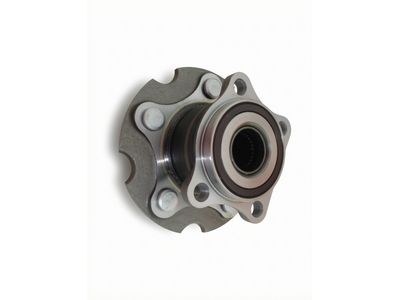
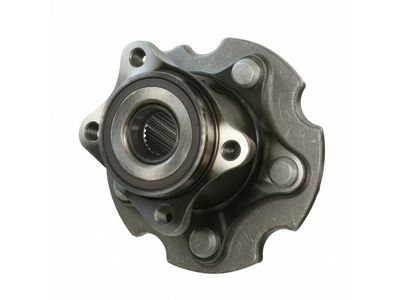

2018 Toyota RAV4 Hub Bearing Assembly
Part Number: 42410-42040$258.55 MSRP: $370.75You Save: $112.20 (31%)Ships in 1-3 Business DaysProduct Specifications- Position: Rear Passenger Side
- Replaced by: 42410-0R010
- Item Weight: 1.40 Pounds
- Item Dimensions: 6.6 x 6.6 x 4.7 inches
- Condition: New
- Fitment Type: Direct Replacement
- SKU: 42410-42040
- Warranty: This genuine Toyota part is covered by warranty.


2018 Toyota RAV4 Hub Bearing Assembly Axle
Part Number: 42450-42040$422.57 MSRP: $630.40You Save: $207.83 (33%)Ships in 1-3 Business DaysProduct Specifications- Other Name: Hub & Bearing Assembly, Rear Axle
- Position: Rear Driver Side
- Replaced by: 42450-0R010
- Item Weight: 7.70 Pounds
- Item Dimensions: 6.3 x 6.3 x 4.3 inches
- Condition: New
- Fitment Type: Direct Replacement
- SKU: 42450-42040
- Warranty: This genuine Toyota part is covered by warranty.


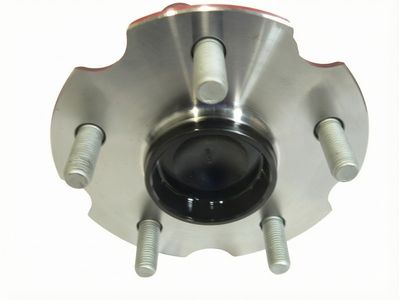
2018 Toyota RAV4 Hub Bearing
Part Number: 42450-0R010$422.57 MSRP: $630.40You Save: $207.83 (33%)Ships in 1-3 Business DaysProduct Specifications- Other Name: Hub & Bearing Assembly, Rear Axle
- Position: Rear Driver Side
- Replaces: 42450-42040
- Item Weight: 7.80 Pounds
- Item Dimensions: 6.3 x 6.1 x 4.4 inches
- Condition: New
- Fitment Type: Direct Replacement
- SKU: 42450-0R010
- Warranty: This genuine Toyota part is covered by warranty.
2018 Toyota RAV4 Wheel Hub
With ToyotaPartsDeal.com, you have access to an extensive inventory of genuine 2018 Toyota RAV4 Wheel Hub, all priced competitively. Feel secure in your purchase, as all our OEM 2018 Toyota RAV4 Wheel Hub are covered by warranty. Plus, we offer a hassle-free return policy and speedy delivery service.
2018 Toyota RAV4 Wheel Hub Parts Questions & Experts Answers
- Q:How to remove and install rear Wheel Hub for the 2018 Toyota RAV4?Posted by Norma V.A:The strut assembly should not be disassembled by the home mechanic, but it can be removed and taken to a dealer service department or repair shop for bearing replacement. For AWD models, begin by loosening the rear driveaxle/hub nut. Next, loosen the wheel lug nuts, raise the vehicle, and securely support it on jackstands, blocking the front wheels to prevent rolling before removing the wheel. If working on an AWD model, remove the driveaxle/hub nut, followed by the brake caliper and disc. Unplug the electrical connector from the ABS wheel speed sensor for 2WD models or remove the rear wheel speed sensor for AWD models. Remove the hub and bearing mounting bolts from the back side of the knuckle, then take out the hub and bearing assembly. For AWD models, it may be necessary to tap the driveaxle through the hub splines as the hub and bearing are withdrawn; if the driveaxle sticks, use a puller to push it out. For installation, lubricate the splines of the driveaxle with multi-purpose grease if working on an AWD model, then position the hub and bearing assembly on the rear knuckle, guiding the driveaxle into the hub splines for AWD models, and install the bolts, tightening them after all four are in place. Install a new driveaxle/hub nut for AWD models, followed by the brake disc, caliper, speed sensor, and the wheel. Finally, lower the vehicle and tighten the lug nuts, ensuring to tighten the driveaxle/hub nut and stake the collar of the nut into the slot in the driveaxle for AWD models.Answered by Toyota Parts Specialist Manuel / Apr 03, 2025
Related 2018 Toyota RAV4 Parts
 2018 Toyota RAV4 Lug Nuts
 2018 Toyota RAV4 Wheel Stud
 2018 Toyota RAV4 Wheel Bearing
 2018 Toyota RAV4 Wheel Seal
 2018 Toyota RAV4 Transfer Case Bearing