

My Garage
My Account
Cart
This part fits
2003 Toyota Land Cruiser
Check another vehicle- Production Date: 08/2002-05/2005
- Fitting Vehicle Options: 2UZFE.. UZJ100
Toyota 16400-50290 Radiator Assembly
2002-2007 Toyota Land Cruiser 1640050290
Customer Questions & Expert Answers (1)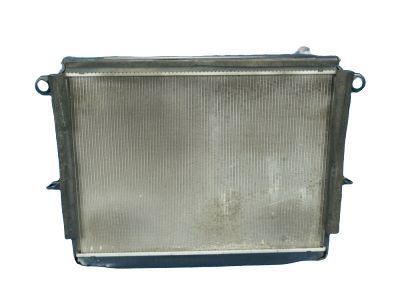
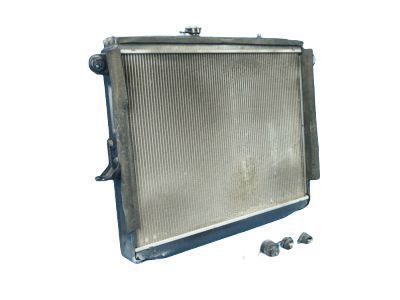
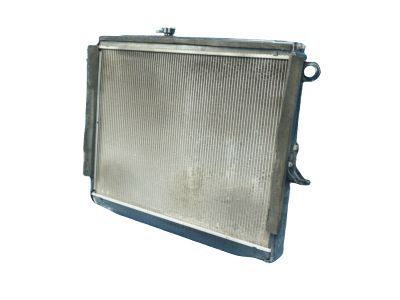
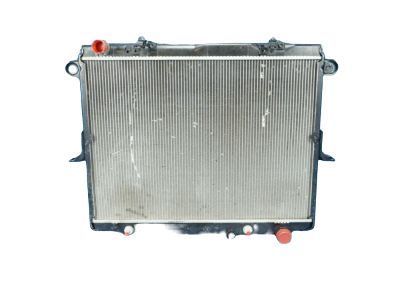
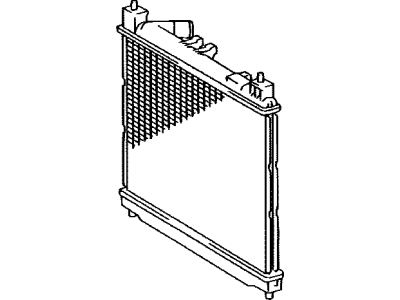
- Part DescriptionRadiator Assy
- Part Name Code16400
- ManufacturerToyota
This part fits
2003 Toyota Land Cruiser
Check another vehicle- Production Date: 08/2002-05/2005
- Fitting Vehicle Options: 2UZFE.. UZJ100
$481.90 MSRP: $718.90
You Save: $237.00 (33%)
Ships in 1-3 Business Days
1
- Related Parts
- Specifications
- Q&A
Product Specifications
Brand Genuine Toyota Part Name Code 16400 Manufacturer Part Number 16400-50290 Part Description Radiator Assy Other Names Radiator Item Dimensions 38.2 x 30.6 x 8.5 inches Item Weight 28.10 Pounds Condition New Fitment Type Direct Replacement Manufacturer Toyota SKU 16400-50290 Warranty This genuine Toyota part is covered by warranty. Shipping & Return Shipping Policy Return Policy Warning: California's Proposition 65Customer Questions & Expert Answers
- Installation & Repair Tips by AI Expert
- Removal: 1. Park on level ground, set parking brake, wear gloves/eye protection, and allow the engine and cooling system to cool fully. 2. Place a drain pan under the radiator and carefully relieve any residual pressure by removing the radiator cap only when cool. 3. Drain coolant by opening the radiator drain or disconnecting a lower hose; collect fluid for reuse or proper disposal. 4. Disconnect the negative battery terminal to isolate electrical circuits. 5. Remove or move aside any trim, splash shields, or intake components that obstruct access, as needed. 6. Disconnect electrical connectors for cooling fans and any radiator-mounted sensors. 7. Disconnect upper and lower radiator hoses and any adjoining heater or bypass hoses, catching remaining coolant. 8. If equipped, disconnect automatic transmission or oil cooler lines and plug them to prevent contamination and spillage. 9. Unfasten the radiator mounting fasteners and any brackets while supporting the radiator to prevent tipping. 10. Carefully lift the radiator straight out, avoiding damage to fins, attached wiring, and surrounding components. Installation: 1. Compare new radiator to the old one and transfer any sensors, fittings, or mounting cushions that are reusable. 2. Carefully position the new radiator into place, aligning mounts without forcing or bending fins, and loosely install mounting fasteners. 3. Reconnect transmission/oil cooler lines if applicable and snug fittings; cap or seal any open lines until fully secured. 4. Reattach fan assembly, shroud, and any brackets that were removed, then reconnect fan and sensor electrical connectors. 5. Reconnect upper, lower, and any auxiliary hoses and secure hose clamps properly. 6. Reinstall any removed trim, splash shields, or intake components. 7. Reconnect the negative battery terminal. 8. Refill the cooling system with the correct type and mixture of coolant; follow a proper bleeding procedure to remove trapped air (open bleed valves, run engine with heater on, and top off as needed). 9. Start the engine, observe for leaks, verify cooling fan operation, and monitor temperature until the system reaches normal operating condition. 10. After cool-down, recheck coolant level and inspect all hose connections and fittings for signs of leakage. Repair tip: Replace worn hoses, clamps, and the radiator cap while the system is open to avoid future leaks and make bleeding easier.
Why choose Toyota Parts Deal
- Dedicated Service
Your complete satisfaction is our #1 goal
- Lowest Prices
Best deals on genuine OE parts from dealerships
- Fast Delivery
Orders are processed and delivered promptly