

My Garage
My Account
Cart
This part fits
2008 Toyota Land Cruiser
Check another vehicle- The location this part fits: Driver Side
- Production Date: 09/2007-01/2010
- Fitting Vehicle Options: URJ200
Toyota 48131-60C81 Front Coil Spring
2008-2021 Toyota Land Cruiser 4813160C81
Customer Questions & Expert Answers (2)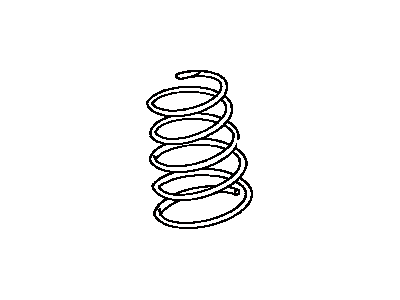
- Part DescriptionSpring, Front Coil, LH
- Part Name Code48132
- PositionDriver Side
- Replaces
- ManufacturerToyota
This part fits
2008 Toyota Land Cruiser
Check another vehicle- The location this part fits: Driver Side
- Production Date: 09/2007-01/2010
- Fitting Vehicle Options: URJ200
$166.13 MSRP: $236.18
You Save: $70.05 (30%)
Ships in 1-3 Business Days
1
- Related Parts
- Specifications
- Q&A
Product Specifications
Brand Genuine Toyota Part Name Code 48132 Manufacturer Part Number 48131-60C81 Part Description Spring, Front Coil, LH Other Names Coil Spring, Spring Manufacturer Note MEXICO SPEC Item Dimensions 16.8 x 7.5 x 6.0 inches Item Weight 1.40 Pounds Position Driver Side Condition New Fitment Type Direct Replacement Replaces 48131-60C80 Manufacturer Toyota SKU 48131-60C81 Warranty This genuine Toyota part is covered by warranty. Shipping & Return Shipping Policy Return Policy Warning: California's Proposition 65Customer Questions & Expert Answers
- Q:Is the above part number correct or is there another correct number for my car? Posted by ToyotaPartsDeal Specialist
- A:You can Select Your Vehicle to check if 48131-60C81 fits your vehicle.Posted by ToyotaPartsDeal Specialist
- Installation and Repair Tips by AI Expert
- Removal steps 1. Park on level ground, chock remaining wheels, set the parking brake, and wear eye protection and gloves. 2. Disconnect the negative battery cable to disable vehicle electrical systems before working near sensors or powered suspension components. 3. Loosen the wheel lug nuts, raise the vehicle with a jack, and support it securely on jack stands; do not rely on the jack alone. 4. Remove the wheel to gain access to the suspension. 5. Support the axle, subframe, or lower control arm with a hydraulic jack or support so the spring load can be safely relieved. 6. Remove or disconnect any components that retain or preload the spring (for example swaybar links, shock absorber lower connection, or control-arm fasteners) as required by the specific design. 7. If the spring is installed on a strut or other assembly that requires it to be compressed, use a suitable spring compressor and follow the compressor manufacturer's instructions before separating the assembly. 8. Carefully lower the suspension component supporting the spring until the spring is free of load and can be removed; extract the spring and any isolators or seats. 9. Inspect spring seats, isolators, related bushings, and mounting hardware for wear or damage and set removed parts aside in order. Installation steps 1. Compare the new spring to the old one and transfer or replace any isolators, pads, or seats as needed, ensuring correct orientation. 2. If the spring must be compressed to install (strut-type), use a proper spring compressor and compress evenly per the tool instructions before positioning the spring. 3. Position the spring onto its seat and ensure it is properly seated in both upper and lower mounts or per design. 4. Slowly raise the supported suspension component or decompress the spring so the spring takes load; verify the spring remains correctly seated during this process. 5. Reinstall and reconnect any components removed earlier (shock lower connection, swaybar link, control-arm fasteners), tightening fasteners to the vehicle manufacturer's specified torque values. 6. Reinstall the wheel, lower the vehicle from jack stands, and torque the lug nuts to the manufacturer's specification. 7. Reconnect the negative battery cable. 8. Perform a visual check for proper clearances, secure fasteners, and any interference with brake lines, hoses, or wiring. 9. Road-test the vehicle at low speed to confirm normal ride and handling, then have a professional wheel alignment performed if required. 10. Repair tip: always use correct-rated spring compressors and never work beneath a compressed spring without redundant safety measures; replace worn isolators to prevent noise and improper seating.
- Q:
Why choose Toyota Parts Deal
- Dedicated Service
Your complete satisfaction is our #1 goal
- Lowest Prices
Best deals on genuine OE parts from dealerships
- Fast Delivery
Orders are processed and delivered promptly