

My Garage
My Account
Cart
Genuine 1986 Toyota Supra Shock Absorber
Suspension Shock Absorber- Select Vehicle by Model
- Select Vehicle by VIN
Select Vehicle by Model
orMake
Model
Year
Select Vehicle by VIN
For the most accurate results, select vehicle by your VIN (Vehicle Identification Number).
9 Shock Absorbers found
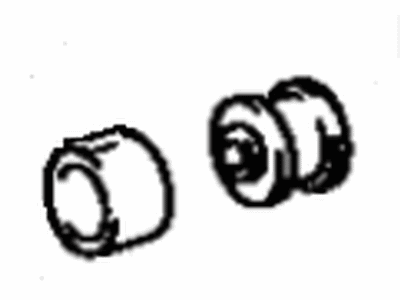
1986 Toyota Supra Absorber Set
Part Number: 48530-19055$117.30 MSRP: $166.77You Save: $49.47 (30%)Ships in 1-3 Business DaysProduct Specifications- Other Name: Absorber Set, Shock
- Manufacturer Note: MARK 48530-14091
- Position: Rear Driver Side
- Replaced by: 48530-19056
- Item Weight: 6.90 Pounds
- Item Dimensions: 26.4 x 6.8 x 5.9 inches
- Condition: New
- Fitment Type: Direct Replacement
- SKU: 48530-19055
- Warranty: This genuine Toyota part is covered by warranty.
1986 Toyota Supra Absorber Assembly
Part Number: 48530-14060$141.37 MSRP: $200.99You Save: $59.62 (30%)Ships in 1-3 Business DaysProduct Specifications- Other Name: Absorber Assembly, Shock
- Manufacturer Note: MARK 48530-14060
- Position: Rear Driver Side
- Replaced by: 48530-19016
- Item Weight: 7.10 Pounds
- Item Dimensions: 25.8 x 6.8 x 5.8 inches
- Condition: New
- Fitment Type: Direct Replacement
- SKU: 48530-14060
- Warranty: This genuine Toyota part is covered by warranty.
1986 Toyota Supra Absorber Set
Part Number: 48530-19015$141.37 MSRP: $200.99You Save: $59.62 (30%)Ships in 1-3 Business DaysProduct Specifications- Other Name: Absorber Set, Shock
- Manufacturer Note: MARK 48530-14060,W/TEMS
- Position: Rear Driver Side
- Replaced by: 48530-19016
- Item Weight: 6.80 Pounds
- Item Dimensions: 25.6 x 6.8 x 5.9 inches
- Condition: New
- Fitment Type: Direct Replacement
- SKU: 48530-19015
- Warranty: This genuine Toyota part is covered by warranty.
1986 Toyota Supra Absorber Set
Part Number: 48530-19045$53.47 MSRP: $74.74You Save: $21.27 (29%)Ships in 1-3 Business DaysProduct Specifications- Other Name: Absorber Set, Shock
- Manufacturer Note: MARK 48530-14080
- Position: Rear Passenger Side
- Replaced by: 48530-19046
- Item Weight: 6.50 Pounds
- Item Dimensions: 26.1 x 6.5 x 5.7 inches
- Condition: New
- Fitment Type: Direct Replacement
- SKU: 48530-19045
- Warranty: This genuine Toyota part is covered by warranty.
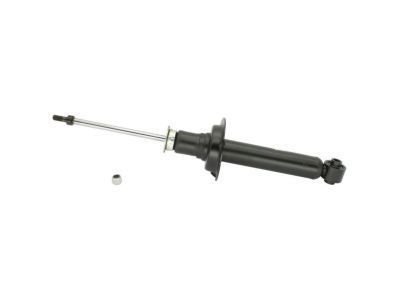 Product Specifications
- Other Name: Absorber Set, Shock ; Absorber Assembly, Shock, Rear Rh
- Position: Rear Passenger Side
- Replaced by: 48530-19026
- Item Weight: 6.90 Pounds
- Item Dimensions: 26.1 x 6.6 x 5.7 inches
- Condition: New
- Fitment Type: Direct Replacement
- SKU: 48530-19025
- Warranty: This genuine Toyota part is covered by warranty.
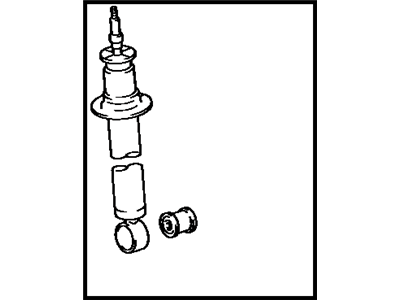 Product Specifications
- Other Name: Absorber Assembly, Shock, Front Rh
- Manufacturer Note: W/TEMS
- Position: Front Passenger Side
- Item Weight: 9.30 Pounds
- Item Dimensions: 26.9 x 8.3 x 7.4 inches
- Condition: New
- Fitment Type: Direct Replacement
- SKU: 48510-14281
- Warranty: This genuine Toyota part is covered by warranty.
- Product Specifications
- Other Name: Absorber Assembly, Shock, Front Lh
- Position: Front Driver Side
- Item Weight: 9.90 Pounds
- Item Dimensions: 26.4 x 8.2 x 7.6 inches
- Condition: New
- Fitment Type: Direct Replacement
- SKU: 48510-14361
- Warranty: This genuine Toyota part is covered by warranty.
- Product Specifications
- Other Name: Absorber Assembly, Shock, Front Lh
- Position: Front Driver Side
- Item Weight: 9.70 Pounds
- Item Dimensions: 27.1 x 8.4 x 7.7 inches
- Condition: New
- Fitment Type: Direct Replacement
- SKU: 48510-14401
- Warranty: This genuine Toyota part is covered by warranty.
- Product Specifications
- Other Name: Absorber Assembly, Shock, Front Rh
- Manufacturer Note: W/TEMS
- Position: Front Passenger Side
- Item Weight: 9.60 Pounds
- Item Dimensions: 27.1 x 8.2 x 7.7 inches
- Condition: New
- Fitment Type: Direct Replacement
- SKU: 48510-14410
- Warranty: This genuine Toyota part is covered by warranty.
1986 Toyota Supra Shock Absorber
With ToyotaPartsDeal.com, you have access to an extensive inventory of genuine 1986 Toyota Supra Shock Absorber, all priced competitively. Feel secure in your purchase, as all our OEM 1986 Toyota Supra Shock Absorber are covered by warranty. Plus, we offer a hassle-free return policy and speedy delivery service.
1986 Toyota Supra Shock Absorber Parts Questions & Experts Answers
- Q:How to remove and install rear Coil Springs and Shock Absorber for the 1986 Toyota Supra?Posted by Sahmon F.A:Although shock absorbers and coil springs don't always wear out simultaneously, both left and right shocks should be replaced at the same time to prevent handling peculiarities and abnormal ride quality. Begin by loosening the wheel lug nuts, raising the vehicle, and securely supporting it on jackstands before removing the wheels. Detach the brake hoses from the brackets by releasing the retaining clips on the suspension arm without separating the brake hose from the metal line. Remove the nut, cushion, and retainer to detach the stabilizer bar link from the suspension arm, then separate the driveaxle from the stub axle flange. Position a jack under the suspension arm for support, then remove the bolt holding the shock absorber to the suspension arm and disconnect it. If replacing the shock absorber, access the top mounting nut by removing the trim cover in the luggage compartment, then withdraw the shock absorber. Carefully lower the jack under the suspension arm, ensuring the brake line and parking brake cable do not stretch, until the coil spring can be removed along with the upper and lower insulators, taking care not to lower the suspension arm further. For installation, place the lower insulator on the suspension arm, position the coil spring with the top insulator attached, and raise the jack to check the lower insulator's position, adjusting as necessary. Reconnect the driveaxle, install the shock absorbers in reverse order of removal, and tighten the fasteners securely. Reconnect the stabilizer bar to the rear suspension arm, tighten the nut, reconnect the brake hoses to the brackets, and install the retaining clips. Finally, install the wheels and lug nuts, lower the vehicle, and tighten the lug nuts to the specified torque.Answered by Toyota Parts Specialist Ryan / Jan 03, 2023
Related 1986 Toyota Supra Parts
 1986 Toyota Supra Coil Springs
 1986 Toyota Supra Tie Rod End
 1986 Toyota Supra Steering Knuckle
 1986 Toyota Supra Wheelhouse
 1986 Toyota Supra Fender