

My Garage
My Account
Cart
Genuine 1992 Toyota Supra Piston
Engine Pistons- Select Vehicle by Model
- Select Vehicle by VIN
Select Vehicle by Model
orMake
Model
Year
Select Vehicle by VIN
For the most accurate results, select vehicle by your VIN (Vehicle Identification Number).
12 Pistons found
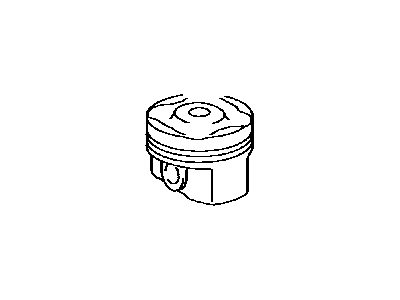
1992 Toyota Supra Piston Sub-Assembly with Pin
Part Number: 13101-42070-00$47.01 MSRP: $65.71You Save: $18.70 (29%)Ships in 1-3 Business DaysProduct Specifications- Other Name: Piston Sub-Assy, W/Pin
- Manufacturer Note: STD,MARK 0
- Replaced by: 13101-42070-S0
- Part Name Code: 13101
- Item Weight: 1.20 Pounds
- Item Dimensions: 3.9 x 3.8 x 3.4 inches
- Condition: New
- Fitment Type: Direct Replacement
- Require Quantity: 6
- SKU: 13101-42070-00
- Warranty: This genuine Toyota part is covered by warranty.
- Product Specifications
- Other Name: Piston Sub-Assy, W/Pin
- Manufacturer Note: STD,MARK 0
- Replaced by: 13101-42080-S0
- Part Name Code: 13101
- Item Weight: 1.20 Pounds
- Item Dimensions: 4.0 x 3.7 x 3.4 inches
- Condition: New
- Fitment Type: Direct Replacement
- Require Quantity: 6
- SKU: 13101-42080-00
- Warranty: This genuine Toyota part is covered by warranty.
1992 Toyota Supra Piston Sub-Assembly with Pin
Part Number: 13103-42080$111.71 MSRP: $157.46You Save: $45.75 (30%)Product Specifications- Other Name: Piston Sub-Assy, W/Pin
- Manufacturer Note: O/S 0.50
- Replaces: 13103-42050
- Part Name Code: 13101
- Item Weight: 1.20 Pounds
- Item Dimensions: 4.0 x 3.7 x 3.4 inches
- Condition: New
- Fitment Type: Direct Replacement
- Require Quantity: 6
- SKU: 13103-42080
- Warranty: This genuine Toyota part is covered by warranty.
- Product Specifications
- Other Name: Piston Sub-Assy, W/Pin
- Manufacturer Note: STD,MARK 1
- Part Name Code: 13101
- Item Weight: 1.20 Pounds
- Item Dimensions: 3.9 x 3.7 x 3.4 inches
- Condition: New
- Fitment Type: Direct Replacement
- Require Quantity: 6
- SKU: 13101-42070-01
- Warranty: This genuine Toyota part is covered by warranty.
- Product Specifications
- Other Name: Piston Sub-Assy, W/Pin
- Manufacturer Note: STD,MARK 3
- Part Name Code: 13101
- Item Weight: 1.20 Pounds
- Item Dimensions: 4.0 x 3.8 x 3.5 inches
- Condition: New
- Fitment Type: Direct Replacement
- Require Quantity: 6
- SKU: 13101-42070-03
- Warranty: This genuine Toyota part is covered by warranty.
- Product Specifications
- Other Name: Piston Sub-Assy, W/Pin
- Manufacturer Note: STD,MARK 4
- Part Name Code: 13101
- Item Weight: 1.20 Pounds
- Item Dimensions: 3.9 x 3.7 x 3.4 inches
- Condition: New
- Fitment Type: Direct Replacement
- Require Quantity: 6
- SKU: 13101-42070-04
- Warranty: This genuine Toyota part is covered by warranty.
- Product Specifications
- Other Name: Piston Sub-Assy, W/Pin
- Manufacturer Note: STD,MARK 1
- Part Name Code: 13101
- Item Weight: 1.20 Pounds
- Item Dimensions: 3.9 x 3.8 x 3.5 inches
- Condition: New
- Fitment Type: Direct Replacement
- Require Quantity: 6
- SKU: 13101-42080-01
- Warranty: This genuine Toyota part is covered by warranty.
- Product Specifications
- Other Name: Piston Sub-Assy, W/Pin
- Manufacturer Note: STD,MARK 3
- Part Name Code: 13101
- Item Weight: 1.20 Pounds
- Item Dimensions: 3.9 x 3.7 x 3.5 inches
- Condition: New
- Fitment Type: Direct Replacement
- Require Quantity: 6
- SKU: 13101-42080-03
- Warranty: This genuine Toyota part is covered by warranty.
- Product Specifications
- Other Name: Piston Sub-Assy, W/Pin
- Manufacturer Note: STD,MARK 4
- Part Name Code: 13101
- Item Weight: 1.20 Pounds
- Item Dimensions: 3.9 x 3.7 x 3.4 inches
- Condition: New
- Fitment Type: Direct Replacement
- Require Quantity: 6
- SKU: 13101-42080-04
- Warranty: This genuine Toyota part is covered by warranty.
- Product Specifications
- Other Name: Piston Sub-Assy, W/Pin; Piston
- Manufacturer Note: STD,MARK 2
- Replaces: 13101-42050, 13101-42050-02
- Part Name Code: 13101
- Item Weight: 1.20 Pounds
- Item Dimensions: 3.9 x 3.7 x 3.4 inches
- Condition: New
- Fitment Type: Direct Replacement
- Require Quantity: 6
- SKU: 13101-42080-02
- Warranty: This genuine Toyota part is covered by warranty.
- Product Specifications
- Other Name: Piston Sub-Assy, W/Pin; Piston
- Manufacturer Note: STD,MARK 2
- Replaces: 13101-42070
- Part Name Code: 13101
- Item Weight: 1.20 Pounds
- Item Dimensions: 3.9 x 3.7 x 3.4 inches
- Condition: New
- Fitment Type: Direct Replacement
- Require Quantity: 6
- SKU: 13101-42070-02
- Warranty: This genuine Toyota part is covered by warranty.
- Product Specifications
- Other Name: Piston Sub-Assy, W/Pin
- Replaces: 13103-42060
- Part Name Code: 13101
- Item Weight: 1.20 Pounds
- Item Dimensions: 4.0 x 3.7 x 3.3 inches
- Condition: New
- Fitment Type: Direct Replacement
- SKU: 13103-42070
- Warranty: This genuine Toyota part is covered by warranty.
1992 Toyota Supra Piston
With ToyotaPartsDeal.com, you have access to an extensive inventory of genuine 1992 Toyota Supra Piston, all priced competitively. Feel secure in your purchase, as all our OEM 1992 Toyota Supra Piston are covered by warranty. Plus, we offer a hassle-free return policy and speedy delivery service.
1992 Toyota Supra Piston Parts Questions & Experts Answers
- Q:What are the steps involved in inspecting and preparing piston/connecting rod assemblies for reassembly for the 1992 Toyota Supra?Posted by Oswaldo P.A:Prior to being able to go through an inspection process the piston/connecting rod assemblies should be scrupulously cleaned and the original piston rings taken off the pistons, in conjunction with having new piston rings used when re-assembling the engine. When removing a piston ring the use of a piston ring installation tool is recommended as this will help to avoid causing scratches with on the pistons. It has to be scrupulously scraped away with a hand-held wire brush or fine emery cloth from the top face of the piston because using a wire brush clamped in a drill motor would probably burn a hole in the soft material. Carbon deposits in those ring grooves may be cleaned using a piston ring groove cleaning tool or a piece of the broken old ring meanwhile the grooves should not be damaged. Again, after the removal of deposits the piston/rod assembly must be cleaned with solvent and dried with compressed air with the understanding that oil return holes must be clear. This was, in large part, because if the pistons and cylinder walls are not overly worn, and if the engine block was not rebored, new pistons could be a non sequitur save for new piston rings which ought to always be fitted during a rebuild operation. All the pistons should look for cracks, scoring, scuffing, holes and burned areas because they often showed signs of over heating or abnormal combustion and this part should lead checking on the cooling and lubrication system. Steady pitting denotes leakages of coolant and this aspect must be looked into in order to avoid its replication. Side clearance of piston rings must be gauged with the help of a feeler gauge and piston-bore clearance should be checked by measuring the bore and piston diameter and should properly be matched, if clearance is beyond the specifications then reboring will be needed along with new pistons and rings. This should be checked in various points of each groove using the correct ring for each groove and a noticeable play in the piston-to-rod clearance means that it has to be machined, which could mean resizing the piston and altogether coming up with new pins at the automotive machine shops. Pistons have to be removed from the connecting rods too; they should also be checked for bend and twist at the machine shops, while the rods should be checked for signs of cracks and damages before new bearing inserts are put in the caps which have to be tightened just enough with the fingers if the rebuild is as a result of connecting rod knock; new rods have to be put in if the rebuild is the one.Answered by Toyota Parts Specialist Manuel / Jun 24, 2025
Related 1992 Toyota Supra Parts
 1992 Toyota Supra Timing Belt
 1992 Toyota Supra Power Steering Hose
 1992 Toyota Supra Master Cylinder Repair Kit
 1992 Toyota Supra Input Shaft Bearing
 1992 Toyota Supra Pilot Bearing
 1992 Toyota Supra Rod Bearing
 1992 Toyota Supra Hydraulic Hose
 1992 Toyota Supra Power Steering Reservoir
 1992 Toyota Supra Piston Ring Set