

My Garage
My Account
Cart
Genuine 2006 Toyota Corolla Axle Shaft
Car Axle Shaft- Select Vehicle by Model
- Select Vehicle by VIN
Select Vehicle by Model
orMake
Model
Year
Select Vehicle by VIN
For the most accurate results, select vehicle by your VIN (Vehicle Identification Number).
26 Axle Shafts found
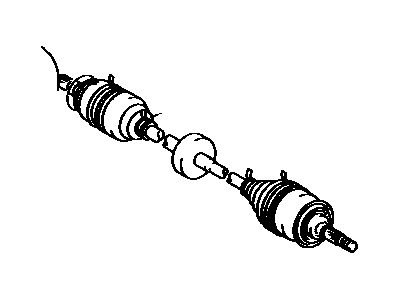
2006 Toyota Corolla Axle Assembly
Part Number: 43420-01070$381.03 MSRP: $568.41You Save: $187.38 (33%)Ships in 1-3 Business DaysProduct Specifications- Other Name: Shaft Assembly, Front Drive, Driver Side; Axle, Axle Assembly
- Position: Driver Side
- Part Name Code: 43420
- Item Weight: 14.90 Pounds
- Item Dimensions: 28.9 x 7.3 x 6.4 inches
- Condition: New
- Fitment Type: Direct Replacement
- SKU: 43420-01070
- Warranty: This genuine Toyota part is covered by warranty.
2006 Toyota Corolla Axle Assembly
Part Number: 43420-02320$396.58 MSRP: $591.63You Save: $195.05 (33%)Ships in 1-3 Business DaysProduct Specifications- Other Name: Shaft Assembly, Front Drive, Driver Side; Axle Assembly
- Manufacturer Note: W(ABS)
- Position: Driver Side
- Part Name Code: 43420
- Item Weight: 14.60 Pounds
- Item Dimensions: 30.4 x 7.3 x 6.7 inches
- Condition: New
- Fitment Type: Direct Replacement
- SKU: 43420-02320
- Warranty: This genuine Toyota part is covered by warranty.
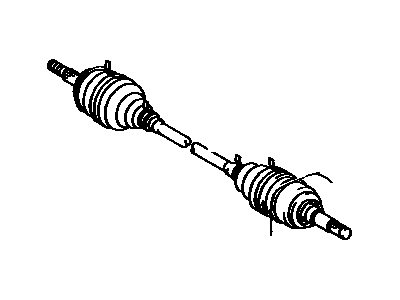
2006 Toyota Corolla Shaft Assembly
Part Number: 43410-02550$455.95 MSRP: $680.18You Save: $224.23 (33%)Ships in 1-3 Business DaysProduct Specifications- Other Name: Shaft Assembly, Front Drive, Passenger Side
- Position: Passenger Side
- Replaced by: 43410-02251
- Part Name Code: 43410
- Item Weight: 15.10 Pounds
- Item Dimensions: 28.9 x 7.2 x 6.4 inches
- Condition: New
- Fitment Type: Direct Replacement
- SKU: 43410-02550
- Warranty: This genuine Toyota part is covered by warranty.
2006 Toyota Corolla Axle Assembly
Part Number: 43420-02360$392.36 MSRP: $585.32You Save: $192.96 (33%)Ships in 1-3 Business DaysProduct Specifications- Other Name: Shaft Assembly, Front Drive, Driver Side; Axle Assembly
- Position: Driver Side
- Part Name Code: 43420
- Item Weight: 14.60 Pounds
- Item Dimensions: 29.5 x 7.4 x 6.4 inches
- Condition: New
- Fitment Type: Direct Replacement
- SKU: 43420-02360
- Warranty: This genuine Toyota part is covered by warranty.
2006 Toyota Corolla Axle Assembly
Part Number: 43420-12590$397.37 MSRP: $592.80You Save: $195.43 (33%)Ships in 1-3 Business DaysProduct Specifications- Other Name: Shaft Assembly, Front Drive, Driver Side; Axle, Axle Assembly
- Position: Driver Side
- Part Name Code: 43420
- Item Weight: 18.20 Pounds
- Item Dimensions: 30.1 x 5.1 x 5.1 inches
- Condition: New
- Fitment Type: Direct Replacement
- SKU: 43420-12590
- Warranty: This genuine Toyota part is covered by warranty.

2006 Toyota Corolla Shaft Assembly
Part Number: 42340-32110$346.02 MSRP: $496.17You Save: $150.15 (31%)Ships in 1-3 Business DaysProduct Specifications- Other Name: Shaft Assembly, Rear Drive
- Position: Rear Passenger Side
- Replaced by: 42340-32111
- Item Weight: 12.60 Pounds
- Item Dimensions: 42.8 x 5.6 x 5.5 inches
- Condition: New
- Fitment Type: Direct Replacement
- SKU: 42340-32110
- Warranty: This genuine Toyota part is covered by warranty.

2006 Toyota Corolla Shaft Assembly
Part Number: 42370-39156$210.76 MSRP: $302.21You Save: $91.45 (31%)Ships in 1-3 Business DaysProduct Specifications- Other Name: Shaft Assembly, Rear Drive
- Position: Rear Driver Side
- Replaced by: 42370-19155
- Item Weight: 14.50 Pounds
- Item Dimensions: 33.3 x 6.5 x 5.8 inches
- Condition: New
- Fitment Type: Direct Replacement
- SKU: 42370-39156
- Warranty: This genuine Toyota part is covered by warranty.
 Product Specifications
- Other Name: Shaft Assy, Front Drive, Rh; Axle, Axle Assembly
- Manufacturer Note: W(ABS)
- Position: Passenger Side
- Part Name Code: 43410
- Item Weight: 14.40 Pounds
- Item Dimensions: 29.5 x 7.3 x 6.5 inches
- Condition: New
- Fitment Type: Direct Replacement
- SKU: 43410-02280
- Warranty: This genuine Toyota part is covered by warranty.


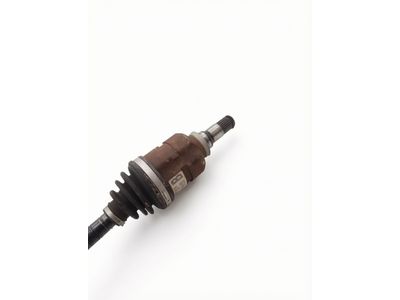
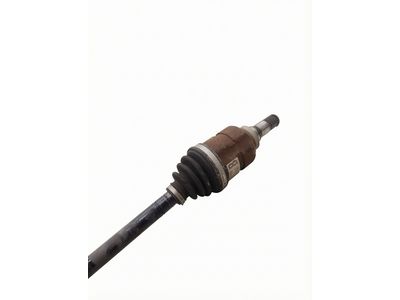 Product Specifications
- Other Name: Shaft Assy, Front Drive, Lh; Axle Assembly
- Manufacturer Note: W(ABS)
- Position: Driver Side
- Part Name Code: 43420
- Item Weight: 17.60 Pounds
- Item Dimensions: 30.7 x 5.1 x 5.1 inches
- Condition: New
- Fitment Type: Direct Replacement
- SKU: 43420-02340
- Warranty: This genuine Toyota part is covered by warranty.
- Product Specifications
- Other Name: Shaft Assy, Front Drive, Rh; Axle, Axle Assembly
- Position: Passenger Side
- Part Name Code: 43410
- Item Weight: 17.70 Pounds
- Item Dimensions: 44.1 x 6.1 x 6.2 inches
- Condition: New
- Fitment Type: Direct Replacement
- SKU: 43410-02350
- Warranty: This genuine Toyota part is covered by warranty.
2006 Toyota Corolla Front Drive Shaft Assembly Right Hand
Part Number: 43410-02310$444.65 MSRP: $663.33You Save: $218.68 (33%)Product Specifications- Other Name: Shaft Assy, Front Drive, Rh; Axle, Axle Assembly
- Position: Passenger Side
- Part Name Code: 43410
- Item Weight: 20.20 Pounds
- Item Dimensions: 49.9 x 6.2 x 6.1 inches
- Condition: New
- Fitment Type: Direct Replacement
- SKU: 43410-02310
- Warranty: This genuine Toyota part is covered by warranty.
- Product Specifications
- Other Name: Shaft Assy, Front Drive, Lh; Axle, Axle Assembly
- Manufacturer Note: W(ABS)
- Position: Driver Side
- Part Name Code: 43420
- Item Weight: 15.20 Pounds
- Item Dimensions: 29.2 x 7.5 x 6.5 inches
- Condition: New
- Fitment Type: Direct Replacement
- SKU: 43420-02390
- Warranty: This genuine Toyota part is covered by warranty.
- Product Specifications
- Other Name: Shaft Assy, Front Drive, Lh; Axle Assembly
- Position: Driver Side
- Part Name Code: 43420
- Item Weight: 14.80 Pounds
- Item Dimensions: 30.1 x 7.2 x 6.5 inches
- Condition: New
- Fitment Type: Direct Replacement
- SKU: 43420-02580
- Warranty: This genuine Toyota part is covered by warranty.
- Product Specifications
- Other Name: Shaft Assy, Front Drive, Rh; Axle Assembly
- Manufacturer Note: W(ABS)
- Position: Passenger Side
- Part Name Code: 43410
- Item Weight: 14.90 Pounds
- Item Dimensions: 30.1 x 7.5 x 6.4 inches
- Condition: New
- Fitment Type: Direct Replacement
- SKU: 43410-02290
- Warranty: This genuine Toyota part is covered by warranty.
- Product Specifications
- Other Name: Shaft Assy, Front Drive, Rh; Axle, Axle Assembly
- Position: Passenger Side
- Part Name Code: 43410
- Item Weight: 24.30 Pounds
- Item Dimensions: 43.3 x 5.5 x 5.4 inches
- Condition: New
- Fitment Type: Direct Replacement
- SKU: 43410-01100
- Warranty: This genuine Toyota part is covered by warranty.
- Product Specifications
- Other Name: Shaft Assy, Front Drive, Lh; Axle, Axle Assembly
- Position: Driver Side
- Part Name Code: 43420
- Item Weight: 15.40 Pounds
- Item Dimensions: 30.1 x 5.2 x 5.1 inches
- Condition: New
- Fitment Type: Direct Replacement
- SKU: 43420-01090
- Warranty: This genuine Toyota part is covered by warranty.
 Product Specifications
- Other Name: Shaft Assy, Front Drive Outboard Joint, Rh; Outer Joint
- Position: Passenger Side
- Part Name Code: 43460
- Item Weight: 14.00 Pounds
- Item Dimensions: 30.5 x 6.2 x 5.3 inches
- Condition: New
- Fitment Type: Direct Replacement
- SKU: 43460-19885
- Warranty: This genuine Toyota part is covered by warranty.
 Product Specifications
- Other Name: Shaft Assy, Front Drive Outboard Joint, Rh; Outer Joint, Outer Joint Assembly
- Position: Passenger Side
- Part Name Code: 43460
- Item Weight: 13.40 Pounds
- Item Dimensions: 31.7 x 6.2 x 5.4 inches
- Condition: New
- Fitment Type: Direct Replacement
- SKU: 43460-09780
- Warranty: This genuine Toyota part is covered by warranty.
- Product Specifications
- Other Name: Shaft Assy, Front Drive Outboard Joint, Rh; Outer Joint, Outer Joint Assembly
- Manufacturer Note: W(ABS)
- Position: Passenger Side
- Part Name Code: 43460
- Item Weight: 12.90 Pounds
- Item Dimensions: 31.1 x 6.4 x 5.4 inches
- Condition: New
- Fitment Type: Direct Replacement
- SKU: 43460-09840
- Warranty: This genuine Toyota part is covered by warranty.
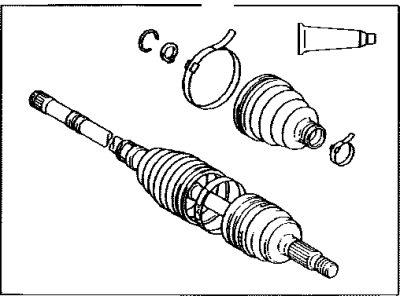 Product Specifications
- Other Name: Shaft Assy, Front Drive Outboard Joint, Lh; Outer Joint, Outer Joint Assembly
- Position: Driver Side
- Part Name Code: 43470
- Item Weight: 14.00 Pounds
- Item Dimensions: 30.5 x 6.4 x 5.5 inches
- Condition: New
- Fitment Type: Direct Replacement
- SKU: 43470-09A10
- Warranty: This genuine Toyota part is covered by warranty.
| Page 1 of 2 |Next >
1-20 of 26 Results
2006 Toyota Corolla Axle Shaft
With ToyotaPartsDeal.com, you have access to an extensive inventory of genuine 2006 Toyota Corolla Axle Shaft, all priced competitively. Feel secure in your purchase, as all our OEM 2006 Toyota Corolla Axle Shaft are covered by warranty. Plus, we offer a hassle-free return policy and speedy delivery service.
2006 Toyota Corolla Axle Shaft Parts Questions & Experts Answers
- Q:How to Remove and Install the Axle Shaft for the 2006 Toyota Corolla?Posted by Luisrodriguez S.A:Before applying any force to the axle shaft it is important you disconnect the cable of the negative terminal of an engine and apply the parking brake. Before changing the front wheel, you need to slightly unscrew the nuts that are around the outer part of the wheel, lift the vehicle using a jack, and then place it on two jackstands safely. Driving axle/Hub nut-unstake/bolt and take-out, use of pry-bar to secure the hub from revolving as the nut is tightened/loosened. When trying to decouple the axle shaft from the hub splines, use a soft-faced hammer or a brass punch and gently hit the end of the axle shaft although one must be careful not to hit the end of the axle shaft through the hub as this would compromise the hub. In the case the axle shaft is lodged, the brake disc may need to be pulled and this might require a two jaw puller. Locate the engine splash shields and set them aside; then, put a drain pan beneath the transaxle to catch any fluids. After that, unscrew the nut and bolt that helps in joining the ball joint on the control arm and then apply force in downward position in order to disunite control arm with the ball joint. Pull out on the steering knuckle to separate the hub from the axle shaft, while supporting the outside in order to avoid striking the inner part of the CV joint. Last of all, proceed delicately to loosen the inner CV joint from the transaxle. To remove, reverse the installation procedure, making sure to force the axle shaft against the retaining ring and slot, engaging the new axle shaft/hub nut and jug nuts to the recommended torque; also check the transaxle for oil, adding if necessary.Answered by Toyota Parts Specialist Ken / Apr 17, 2025
Related 2006 Toyota Corolla Parts
 2006 Toyota Corolla Wheel Bearing
 2006 Toyota Corolla Wheel Seal
 2006 Toyota Corolla Torque Converter
 2006 Toyota Corolla Output Shaft Bearing
 2006 Toyota Corolla Transmission Pan
 2006 Toyota Corolla Input Shaft Bearing
 2006 Toyota Corolla Pinion Washer