

My Garage
My Account
Cart
Genuine 2010 Toyota Sienna Piston
Engine Pistons- Select Vehicle by Model
- Select Vehicle by VIN
Select Vehicle by Model
orMake
Model
Year
Select Vehicle by VIN
For the most accurate results, select vehicle by your VIN (Vehicle Identification Number).
3 Pistons found
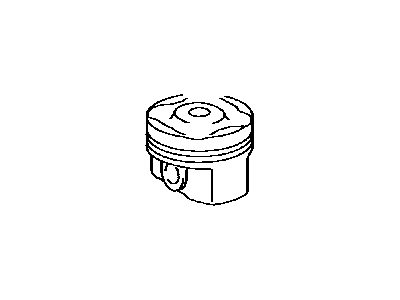
2010 Toyota Sienna Piston Subassembly
Part Number: 13101-31091$60.14 MSRP: $84.79You Save: $24.65 (30%)Ships in 1-3 Business DaysProduct Specifications- Other Name: Piston Subassembly, With Pin
- Replaces: 13101-31090
- Part Name Code: 13101
- Item Weight: 1.40 Pounds
- Item Dimensions: 4.1 x 3.8 x 3.6 inches
- Condition: New
- Fitment Type: Direct Replacement
- Require Quantity: 6
- SKU: 13101-31091
- Warranty: This genuine Toyota part is covered by warranty.
2010 Toyota Sienna Piston Subassembly
Part Number: 13101-0P052$69.36 MSRP: $97.77You Save: $28.41 (30%)Ships in 1-3 Business DaysProduct Specifications- Other Name: Piston Subassembly, With Pin
- Replaced by: 13101-0P053
- Part Name Code: 13101
- Item Weight: 1.40 Pounds
- Item Dimensions: 4.0 x 3.8 x 3.4 inches
- Condition: New
- Fitment Type: Direct Replacement
- Require Quantity: 6
- SKU: 13101-0P052
- Warranty: This genuine Toyota part is covered by warranty.
2010 Toyota Sienna Piston Sub-Assembly with Pin
Part Number: 13101-0P053$69.36 MSRP: $97.77You Save: $28.41 (30%)Product Specifications- Other Name: Piston Sub-Assy, W/Pin; Piston
- Replaces: 13101-0P051, 13101-0P052, 13101-0P050
- Part Name Code: 13101
- Item Weight: 1.40 Pounds
- Item Dimensions: 4.1 x 3.8 x 3.6 inches
- Condition: New
- Fitment Type: Direct Replacement
- Require Quantity: 6
- SKU: 13101-0P053
- Warranty: This genuine Toyota part is covered by warranty.
2010 Toyota Sienna Piston
With ToyotaPartsDeal.com, you have access to an extensive inventory of genuine 2010 Toyota Sienna Piston, all priced competitively. Feel secure in your purchase, as all our OEM 2010 Toyota Sienna Piston are covered by warranty. Plus, we offer a hassle-free return policy and speedy delivery service.
2010 Toyota Sienna Piston Parts Questions & Experts Answers
- Q:What steps should be taken to prepare piston/connecting rod assemblies for inspection for the 2010 Toyota Sienna?Posted by Ramil R.A:However, before the inspection process may be done, most of the piston/connecting rod assemblies must be washed and most of the original piston rings must also be removed from the pistons with new one used in the reconditioning. Hold the piston rings between your thumb and forefinger and with the help of piston ring installation tool gently take the rings off from the pistons without scratching the latter. Clean all of the carbon off the top of the piston using a small hand-held wire brush or fine emery paper; DO NOT use a wire brush with a motor attached to it as this is likely to wear a groove in the softer surface of the piston. Carbonaceous deposits from the groove or rust and scale from out sides should be scrape out using a piston ring groove-cleaning tool or a piece of metal broken off the old ring that fits the groove should be used and while doing this should not remove any metal or mars the groove. Once the deposits have been empties, wash the piston/rod assemblies with solvent and blow them off with compressed air, making sure that the oil return holes and the hole in the lower end of each rod are open. Only when the pistons and cylinder walls are worn or damaged and when the engine block is not rebored new pistons are not mandatory, however new piston rings have to be always fitted in any rebuild. Every piston should ought to be checked for cracks, scoring, scuffing, holes and burned out areas since these are the symptoms of overheating, abnormal combustion or spark knock therefore, checking the cooling and lubrication system. Pitting type of corrosion is evidence of coolant penetration into the combustion chamber or crankcase, and this has to be rectified to avoid future occurrences. Check with a new piston ring and a feeler gauge at certain points of a piston ring groove for the correct ring and use the values to compare with the standard then check for the misfit and if it is too wide the piston needs to be replaced. Ensure that the piston to bore clearance is correct by comparing the bore and piston diameter, if not do the following, rebore the block and put new piston and rings in it. Raise the piston and try to turn the piston and rod in opposite directions; if the two parts of a kit exhibits considerable play, it will have to be "repaired." If pistons have to be pulled out from the connecting rods, should be taken to the automotive machine shop for bend and twist. Finally, check for crack and damages with the connecting rods by removing the rod caps and cleaning the bearing areas, for nicks, gouges and crack then replace old bearings and tighten the rod cap by fingers only and new connecting rods should be fitted if the engine is being rebuked for connecting rod knock.Answered by Toyota Parts Specialist Jerry / May 09, 2025
Related 2010 Toyota Sienna Parts
 2010 Toyota Sienna Timing Chain
 2010 Toyota Sienna Power Steering Hose
 2010 Toyota Sienna Master Cylinder Repair Kit
 2010 Toyota Sienna Hydraulic Hose
 2010 Toyota Sienna Piston Ring Set
 2010 Toyota Sienna Timing Chain Tensioner
 2010 Toyota Sienna Power Steering Reservoir
 2010 Toyota Sienna Rod Bearing
 2010 Toyota Sienna Input Shaft Bearing