My Garage
My Account
Cart
Genuine Toyota Solara Cylinder Head
Head- Select Vehicle by Model
- Select Vehicle by VIN
Select Vehicle by Model
orMake
Model
Year
Select Vehicle by VIN
For the most accurate results, select vehicle by your VIN (Vehicle Identification Number).
27 Cylinder Heads found
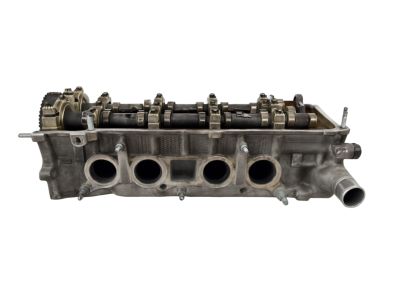
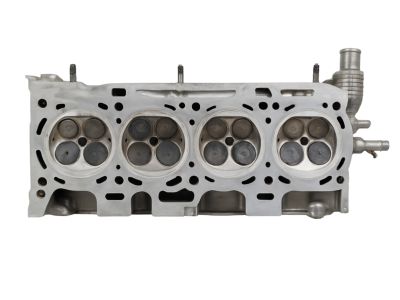
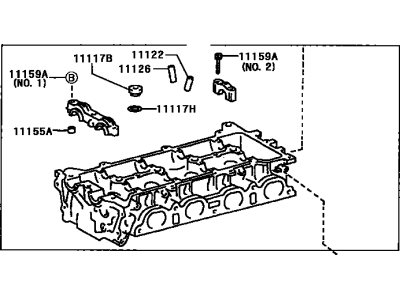
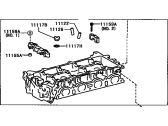
Toyota Solara Cylinder Head Sub-Assembly
Part Number: 11101-28012$686.10 MSRP: $871.23You Save: $185.13 (22%)Ships in 1-3 Business Days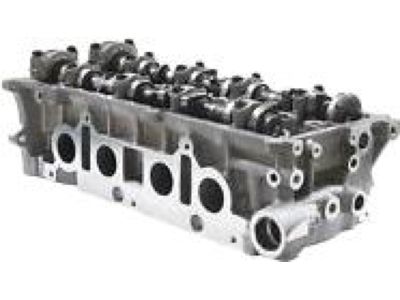
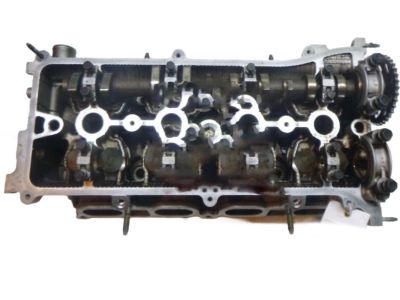
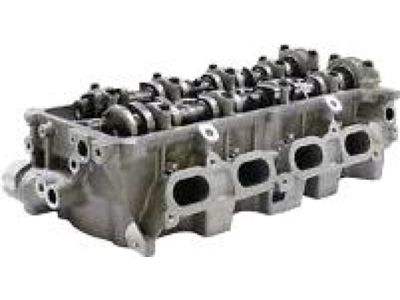
Toyota Solara Cylinder Head Sub-Assembly
Part Number: 11101-28011$686.10 MSRP: $871.23You Save: $185.13 (22%)Ships in 1-3 Business Days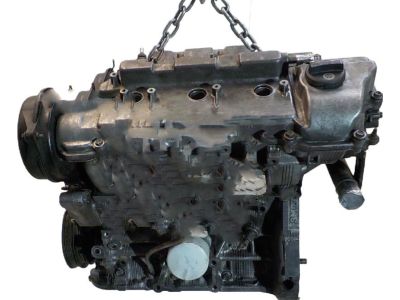
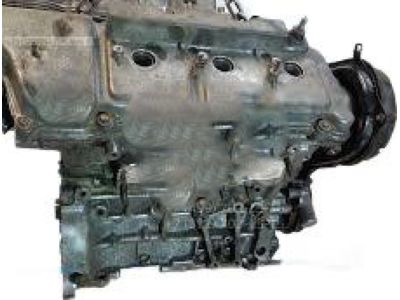
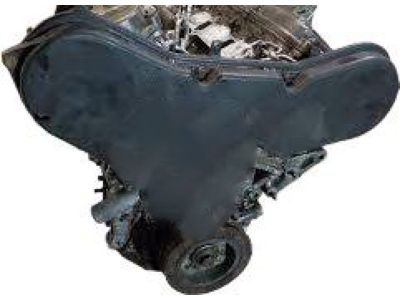
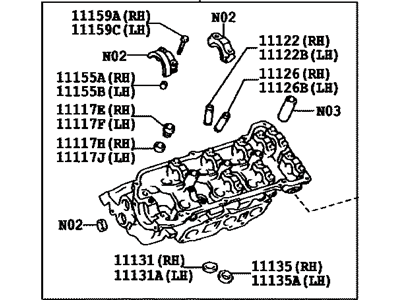
Toyota Solara Head, Cylinder, LH
Part Number: 11102-09050$1041.36 MSRP: $1322.35You Save: $280.99 (22%)Ships in 1-3 Business Days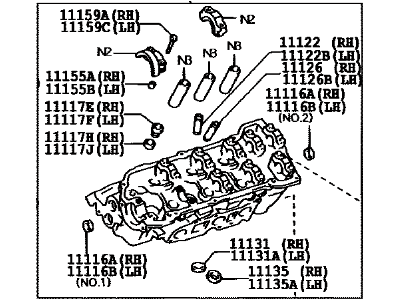
Toyota Solara Cylinder Head Sub-Assembly Left Hand
Part Number: 11102-29075$1041.36 MSRP: $1322.35You Save: $280.99 (22%)Ships in 1-3 Business DaysToyota Solara Cylinder Head Sub-Assembly
Part Number: 11101-29485$1025.09 MSRP: $1301.70You Save: $276.61 (22%)Ships in 1-3 Business DaysToyota Solara Cylinder Head Sub-Assembly
Part Number: 11101-0H011$686.10 MSRP: $871.23You Save: $185.13 (22%)Ships in 1-3 Business DaysToyota Solara Cylinder Head Sub-Assembly
Part Number: 11101-09073$561.97 MSRP: $713.61You Save: $151.64 (22%)Ships in 1-3 Business Days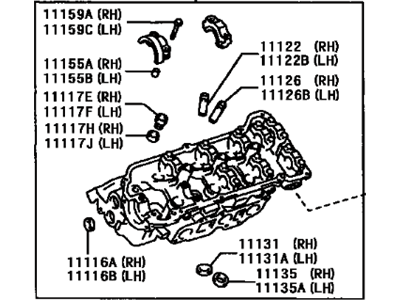
Toyota Solara Head, Cylinder, LH
Part Number: 11102-09012$561.97 MSRP: $713.61You Save: $151.64 (22%)Ships in 1-3 Business DaysToyota Solara Cylinder Head Sub-Assembly
Part Number: 11101-09071$625.68 MSRP: $794.51You Save: $168.83 (22%)Ships in 1-3 Business DaysToyota Solara Cylinder Head Sub-Assembly
Part Number: 11101-09072$625.68 MSRP: $794.51You Save: $168.83 (22%)Ships in 1-3 Business DaysToyota Solara Cylinder Head Sub-Assembly
Part Number: 11101-09150$1025.09 MSRP: $1301.70You Save: $276.61 (22%)Ships in 1-3 Business DaysToyota Solara Cylinder Head Sub-Assembly
Part Number: 11101-09060$969.78 MSRP: $1231.46You Save: $261.68 (22%)Ships in 1-3 Business DaysToyota Solara Cylinder Head Sub-Assembly
Part Number: 11101-09050$979.25 MSRP: $1243.50You Save: $264.25 (22%)Ships in 1-3 Business DaysToyota Solara Cylinder Head Sub-Assembly
Part Number: 11101-29406$1005.85 MSRP: $1277.28You Save: $271.43 (22%)Ships in 1-3 Business DaysToyota Solara Cylinder Head Sub-Assembly
Part Number: 11101-29407$1005.85 MSRP: $1277.28You Save: $271.43 (22%)Ships in 1-3 Business DaysToyota Solara Cylinder Head Sub-Assembly
Part Number: 11101-29408$1005.85 MSRP: $1277.28You Save: $271.43 (22%)Ships in 1-3 Business DaysToyota Solara Cylinder Head Sub-Assembly
Part Number: 11101-29409$1005.85 MSRP: $1277.28You Save: $271.43 (22%)Ships in 1-3 Business DaysToyota Solara Cylinder Head Assembly
Part Number: 11102-09010$1036.12 MSRP: $1315.71You Save: $279.59 (22%)Ships in 1-3 Business DaysToyota Solara Cylinder Head Assembly
Part Number: 11102-09011$1036.12 MSRP: $1315.71You Save: $279.59 (22%)Ships in 1-3 Business Days
| Page 1 of 2 |Next >
1-20 of 27 Results
Toyota Solara Cylinder Head
The Cylinder Head for the Toyota Solara vehicles serves as a very important engine part that will enable air and fuel to be released into the engine and the exhaust gases to escape. It contains critical valves and spark plugs as the upper section of the combustion chamber. Different Cylinder Heads have been applied ranging from aluminum alloys due to their lightweight characteristics and high performance in heat dissipation, which makes it much better as compared to other materials. Typical defects in the Solara Cylinder Head can cause critical problems; for instances, poor engine performance or leak as a result of warpage or cracks. To guarantee ideal sealing, Toyota makes use of torque-to-yield (TTY) head bolts, which offer enhanced clamping over the normal bolts. All in all, the design and material selection for the Toyota Solara Cylinder Head is critical towards maximizing airflow and enhancing the power-to-weight ratio of the vehicle.
If you are in demand for superior quality and affordable OEM Toyota Solara Cylinder Head, then shop with us! We own a wide range of the reduced-priced genuine Toyota Solara Cylinder Head. You can purchase in confidence as all parts come with a manufacturer's warranty. Any issues with our products? No need to worry as we have a hassle-free return policy to guide you every step of the way.
Toyota Solara Cylinder Head Parts Questions & Experts Answers
- Q:How to remove and reinstall a cylinder head on Four cylinder engine on 1997 through 2001 Toyota Solara?A:When working on your Toyota Solara, wait until the engine has cooled down completely before you turn the ignition. Start by taking off the negative battery cable and letting all the coolant drain from both your engine block and radiator. Wash out your car's suspension brace in front, drain engine oil, then remove and empty the oil filter. Unscrew the throttle body first, and then take out the fuel injectors and fuel rail. Following that, remove both the intake and exhaust manifolds. Pull out the Timing Belt and lower two parts, then clear out the upper rear camshaft cover, and disconnect the engine position sensor. Detach and pull out camshafts and lifters on one side of the engine, disconnect the cables to alternator and distributor, but keep the hoses connected to the power steering pump. Take out any markings you put on earlier and remove everything else attached to the head so you can start working on it. Slightly relax each cylinder bolt by turning them a 1/4-degree counterclockwise, easing the head away from the engine block. Take off all outside parts from the head so you can clean and examine it. First follow these four steps: Scrub both head and block mating surfaces clean by hand, remove leftover grime with a scraper, wipe with lacquer thinner, and finish with acetone. Confirm there is no harm done on the gasket contact surfaces and improve the threads in the bolt holes on the cylinder head. Put back the removed head parts, place the new gasket, and place the head very gently into position on the block. Put new engine oil on the threads of the head bolts before putting them back in, where they belonged originally. Use the proper head bolt tightening steps in order when tightening them. The final steps for installation are exactly like the reverse of what took place when removing everything. Wrap up by inspecting and fixing the valves (if needed), filling the cooling system, putting a fresh oil filter in place, pouring oil into the engine, making sure there are no leaks while running the engine, setting the ignition timing correctly, and taking the car on the road for testing.