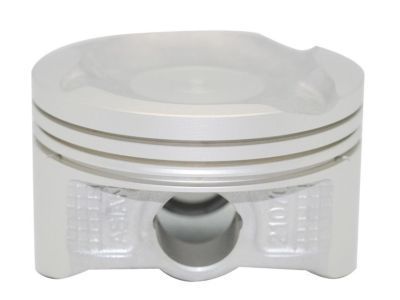
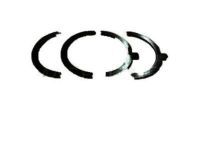
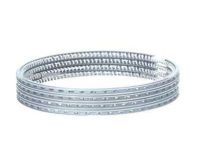
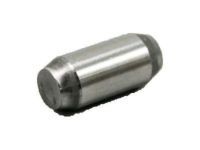
The inspection process, therefore, needs that the piston/connecting rod assemblies must be cleaned, and the original piston rings must be removed. Now carefully expand old rings upwards over pistons by use of two or three old feeler blades to avoid dropping them into empty grooves. Additionally, carbon deposits may be scrapped off from the top of a piston with a handheld wire brush or fine emery cloth. While trying to remove carbon deposits on a piston's ring groove using an old ring, take care not to scratch or take away any metal from the sides. Using paraffin or an appropriate solvent, clean the piston/connecting rod assembly and ensure that oil return holes are clear in the ring grooves. Provided that pistons and cylinder bores are not excessively worn or damaged; then original pistons can be re-used but new piston rings should always be used when reassembling the engine. For every piston check if there are cracks about its skirt, gudgeon pin bosses and also the lands of its ring. The presence of scoring, scuffing, holes and burns suggest that upon inspection one will find this on the piston's surface. The presence of scorch marks indicates that rings sealed improperly while a hole in crown implies irregular combustion. Things provoking such problems have got to be corrected immediately. Corrosion appears as small pits indicating leaks in coolant which need attention soonest possible. Piston-ring-to-groove clearance and piston-to-bore clearance can determine if new pistons are required. Also make sure there is no excessive play for fitting gudgeon pin before it is put back in place again. After removing rings their end gaps should be checked before fitting them properly by spacing top ring gaps at 180° to each other and ensuring oil control rail top and bottom rails are correctly positioned.