

My Garage
My Account
Cart
Genuine 1985 Toyota MR2 Piston
Engine Pistons- Select Vehicle by Model
- Select Vehicle by VIN
Select Vehicle by Model
orMake
Model
Year
Select Vehicle by VIN
For the most accurate results, select vehicle by your VIN (Vehicle Identification Number).
2 Pistons found
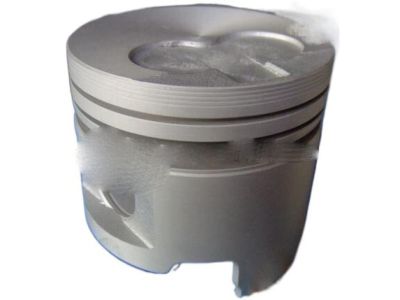
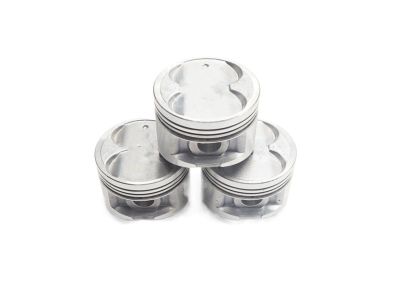
 Product Specifications
- Other Name: Piston Sub-Assy, W/Pin
- Manufacturer Note: STD,STD
- Replaced by: 13101-16020-02
- Part Name Code: 13101
- Item Weight: 1.20 Pounds
- Item Dimensions: 4.0 x 3.7 x 3.5 inches
- Condition: New
- Fitment Type: Direct Replacement
- Require Quantity: 4
- SKU: 13101-16020
- Warranty: This genuine Toyota part is covered by warranty.
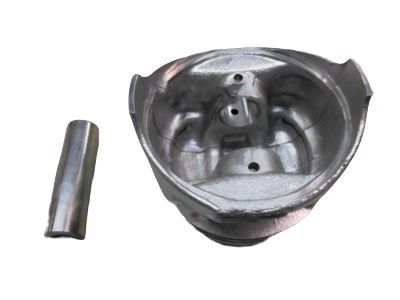 Product Specifications
- Other Name: Piston Sub-Assy, W/Pin
- Manufacturer Note: O/S 0.50,O/S 0.50
- Part Name Code: 13101
- Item Weight: 1.30 Pounds
- Item Dimensions: 3.9 x 3.7 x 3.5 inches
- Condition: New
- Fitment Type: Direct Replacement
- Require Quantity: 4
- SKU: 13103-16020
- Warranty: This genuine Toyota part is covered by warranty.
1985 Toyota MR2 Piston
With ToyotaPartsDeal.com, you have access to an extensive inventory of genuine 1985 Toyota MR2 Piston, all priced competitively. Feel secure in your purchase, as all our OEM 1985 Toyota MR2 Piston are covered by warranty. Plus, we offer a hassle-free return policy and speedy delivery service.
1985 Toyota MR2 Piston Parts Questions & Experts Answers
- Q:What steps should be taken to prepare piston/connecting rod assemblies for inspection for the 1985 Toyota MR2?Posted by Jayfrancis L.A:Prior to the inspection process, some of the piston/connecting rod assemblies need to be cleaned and the original piston rings taken out off the pistons, reassembly of which utilisises new piston rings only. Carefully lift the rings off the piston using a piston ring installation tool, while seeing to it that the latter is not scarped in the process. Remove all carbon from the face of the crown with a hand-held wire brush or fine emery paper, never using wire-brush mounted in a drill as this will cause cutting into the soft alloy of the piston. It is recommended to clean the ring grooves with a piston ring groove cleaning tool, although one may employ a section of a ring if the tool's not available; this should be done carefully so as not to harm the grooves in the cylinder's sides. Next, strip the deposits off and clean the piston/rod assemblies with solvent and then blow dry with compressed air, to ensure the oil return holes are not blocked. If the pistons are not badly worn or scored, new pistons are not always needed but new piston rings should be installed with any engine rebuild. All pistons must be checked for cracks, scores, scuffs, holes and burn areas, these often show signs of overheating or abnormal combustion, the cooling and lubrisation systems should be further inspected. Tiny pinhole pits imply coolant leakage and this should be corrected to avoid the problem in the freshly rebuilt engine. Using a feeler gauge check the piston ring side clearance and also check the piston to bore clearance by measuring the diameter of the bore and of the piston to check it they are well matched. When the piston-to-cylinder clearance goes beyond recommended values, then Toyota advises users to replace the block because reboring and standard oversized pistons are not advisable. Twist the piston and the rod-when there is evident shake, there will be an excessive wear that will call for correction depending on the extent of damage that may include rebore and new piston pin at the automotive machine shop. In case pistons have to be extracted from connecting rods, such places must be subjected to bending and twisting tests and this calls for the services of a machine shop. Last but not the least, examine the connecting rods for visible signs of crack and damages; as a result remove the caps of the rods in an effort to examine the bearing surface for signs of nick or scratch before resetting.Answered by Toyota Parts Specialist Jerry / Dec 23, 2025
Related 1985 Toyota MR2 Parts
 1985 Toyota MR2 Timing Belt
 1985 Toyota MR2 Rod Bearing
 1985 Toyota MR2 Master Cylinder Repair Kit
 1985 Toyota MR2 Input Shaft Bearing
 1985 Toyota MR2 Hydraulic Hose
 1985 Toyota MR2 Piston Ring Set
 1985 Toyota MR2 Pilot Bearing