

My Garage
My Account
Cart
Genuine 1987 Toyota Supra Cylinder Head
Head- Select Vehicle by Model
- Select Vehicle by VIN
Select Vehicle by Model
orMake
Model
Year
Select Vehicle by VIN
For the most accurate results, select vehicle by your VIN (Vehicle Identification Number).
1 Cylinder Head found
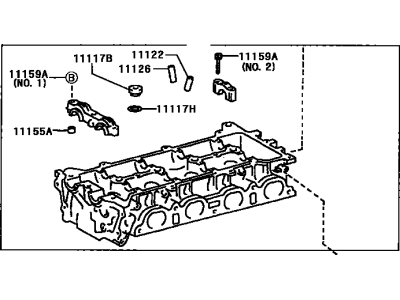 Product Specifications
- Other Name: Head Sub-Assy, Cylinder; Cylinder Head
- Part Name Code: 11101
- Item Weight: 27.30 Pounds
- Item Dimensions: 21.5 x 12.2 x 10.2 inches
- Condition: New
- Fitment Type: Direct Replacement
- SKU: 11101-42030
- Warranty: This genuine Toyota part is covered by warranty.
1987 Toyota Supra Cylinder Head
With ToyotaPartsDeal.com, you have access to an extensive inventory of genuine 1987 Toyota Supra Cylinder Head, all priced competitively. Feel secure in your purchase, as all our OEM 1987 Toyota Supra Cylinder Head are covered by warranty. Plus, we offer a hassle-free return policy and speedy delivery service.
1987 Toyota Supra Cylinder Head Parts Questions & Experts Answers
- Q:How to thoroughly clean and inspect cylinder heads and valve components during an engine overhaul for the 1987 Toyota Supra?Posted by Russel R.A:A thorough cleaning of the cylinder head(s) together with related valve train parts, with an intensive following inspection will facilitate the assessment of the required services on the valves during the general engine repair. Start by using a scraper to clean off all remnants of the gasket material and sealing compound on the head gasket, intake manifold and exhaust manifold sealing surfaces; be sure not to scratch the Cylinder head. Scrub 'timed' deposits with a stiff wire brush from various holes and flush inner passages to rid the coolant passages of accumulated scale. For threaded hole run an appropriate size tap to remove corrosion and thread sealant, it is recommended that the user should wear eye protection and blow debris off the hole using compressed air. Clean the cylinder head with solvent but make sure that the same is dried properly with the help of compressed air to do the task faster. That might be of some usefulness to try to decarbonise chemicals but it should be done very carefully. Clean all the valve springs, spring seats, keepers and retainers individually to avoid confusion of the parts. Scrape off dirt from the valves especially in areas with tough deposits by using a motorized wither brush, keep the valves arranged. Check head for cracks, leakages and other forms of damage and if it requires, repair from an automotive machine shop. You should check whether the head gasket mating surface is warped with the help of a straightedge and a feeler gauge; in case the valve seats look pitted or cracked or appear to be burnt you will need professional help. Check the stem-to-guide clearance with a dial indicator while the valve is in the exact position of use. The inner and outer periphery of all the valves shall be visually examined for wear, deformation, crack, pits and burned areas and the stem for scuffing while the neck of the valve shall be checked for cracks. Check for the width of the margin on each valve you have and replace the one that is not as specified. Every valve spring should be inspected for wear and pits, with the free length measured and compared to specifications and all that are too short discarded. Each spring must be square; stand it on the flat surface and replace the distorted or sagged springs if any. Last but not the least, check the spring retainers and keepers for the wear and cracks, replace any faulty part in order to avoid high levels of deterioration in the operating engines.Answered by Toyota Parts Specialist Phil / Dec 07, 2024
Related 1987 Toyota Supra Parts
 1987 Toyota Supra Cylinder Head Bolts
 1987 Toyota Supra Timing Cover
 1987 Toyota Supra Cylinder Head Gasket
 1987 Toyota Supra Camshaft