

My Garage
My Account
Cart
Genuine 1992 Toyota Land Cruiser Axle Shaft
Car Axle Shaft- Select Vehicle by Model
- Select Vehicle by VIN
Select Vehicle by Model
orMake
Model
Year
Select Vehicle by VIN
For the most accurate results, select vehicle by your VIN (Vehicle Identification Number).
10 Axle Shafts found
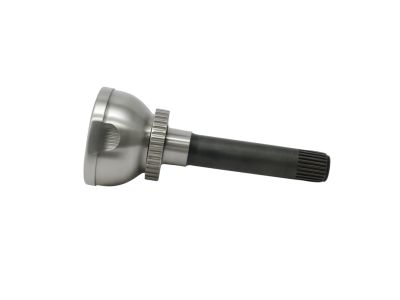
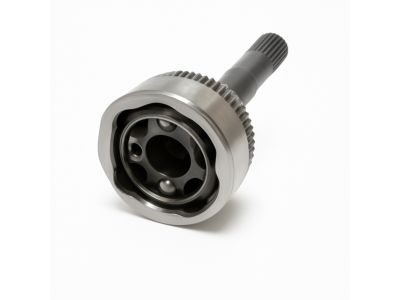
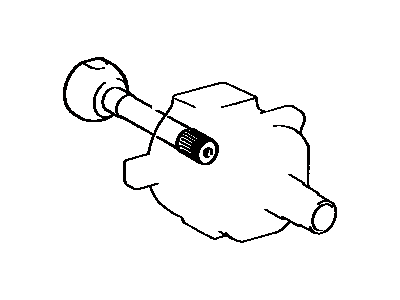
1992 Toyota Land Cruiser Front Axle Outer Shaft Sub-Assembly
Part Number: 43405-60060$350.78 MSRP: $523.29You Save: $172.51 (33%)Product Specifications- Other Name: Shaft Sub-Assy, Front Axle Outer
- Manufacturer Note: W(*66),L=238.5
- Position: Outer
- Part Name Code: 43405
- Item Weight: 14.50 Pounds
- Item Dimensions: 30.6 x 8.1 x 6.8 inches
- Condition: New
- Fitment Type: Direct Replacement
- Require Quantity: 2
- SKU: 43405-60060
- Warranty: This genuine Toyota part is covered by warranty.
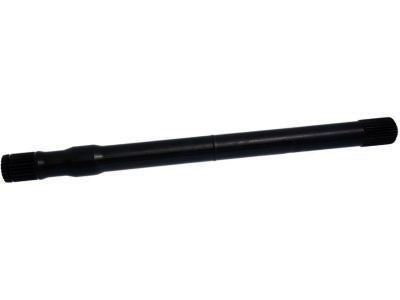
1992 Toyota Land Cruiser Front Axle Shaft, Inner Right
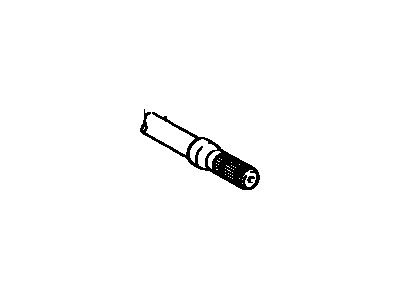
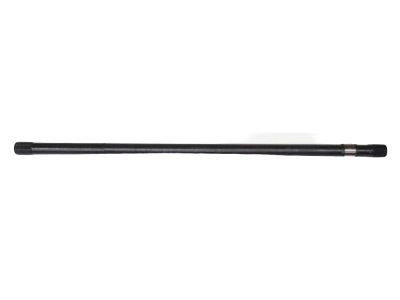
Part Number: 43411-60040$170.81 MSRP: $242.83You Save: $72.02 (30%)Ships in 1-2 Business DaysProduct Specifications- Other Name: Shaft, Front Axle, Inner Rh
- Position: Inner Passenger Side
- Replaced by: 43411-60090
- Part Name Code: 43411
- Item Weight: 6.00 Pounds
- Item Dimensions: 35.6 x 1.4 x 1.3 inches
- Condition: New
- Fitment Type: Direct Replacement
- SKU: 43411-60040
- Warranty: This genuine Toyota part is covered by warranty.
1992 Toyota Land Cruiser Front Axle Shaft, Inner Lh
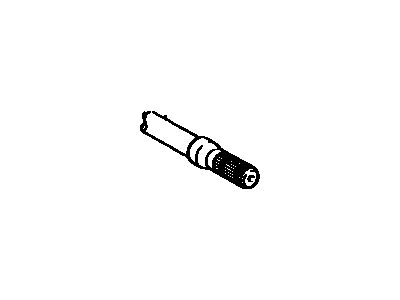
Part Number: 43412-60070$325.48 MSRP: $466.72You Save: $141.24 (31%)Product Specifications- Other Name: Shaft, Front Axle, Inner Lh
- Position: Inner Driver Side
- Replaced by: 43412-60110
- Part Name Code: 43412
- Item Weight: 11.80 Pounds
- Item Dimensions: 18.8 x 1.4 x 1.4 inches
- Condition: New
- Fitment Type: Direct Replacement
- SKU: 43412-60070
- Warranty: This genuine Toyota part is covered by warranty.
1992 Toyota Land Cruiser Front Axle Outer Shaft Sub-Assembly
Part Number: 43405-60030$850.08 MSRP: $1269.29You Save: $419.21 (34%)Product Specifications- Other Name: Shaft Sub-Assy, Front Axle Outer
- Position: Outer
- Replaced by: 43405-60120
- Part Name Code: 43405
- Item Weight: 15.20 Pounds
- Item Dimensions: 28.0 x 7.6 x 6.7 inches
- Condition: New
- Fitment Type: Direct Replacement
- Require Quantity: 2
- SKU: 43405-60030
- Warranty: This genuine Toyota part is covered by warranty.
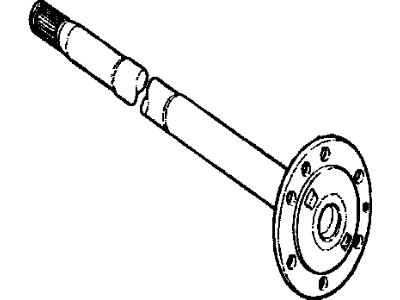
1992 Toyota Land Cruiser Rear Axle Shaf
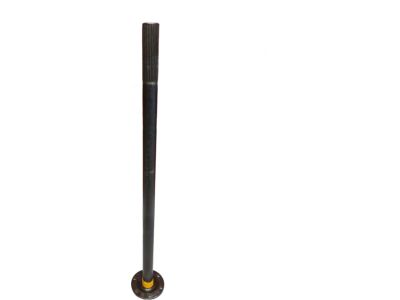
Part Number: 42311-60110$275.01 MSRP: $394.34You Save: $119.33 (31%)Product Specifications- Other Name: Shaft, Rear Axle; Axle Shaft
- Position: Passenger Side
- Part Name Code: 42311
- Item Weight: 14.90 Pounds
- Item Dimensions: 29.6 x 7.9 x 7.1 inches
- Condition: New
- Fitment Type: Direct Replacement
- SKU: 42311-60110
- Warranty: This genuine Toyota part is covered by warranty.
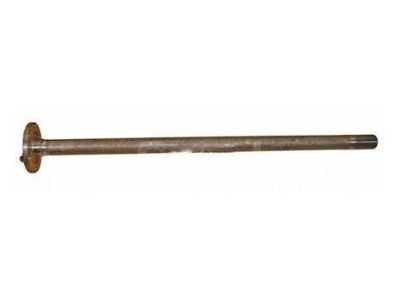 Product Specifications
- Other Name: Shaft, Rear Axle; Axle Shaft
- Position: Passenger Side
- Part Name Code: 42311
- Item Weight: 15.10 Pounds
- Item Dimensions: 29.6 x 8.0 x 6.9 inches
- Condition: New
- Fitment Type: Direct Replacement
- SKU: 42311-60100
- Warranty: This genuine Toyota part is covered by warranty.
1992 Toyota Land Cruiser Rear Axle Shaf
Part Number: 42312-60080$616.37 MSRP: $920.32You Save: $303.95 (34%)Product Specifications- Other Name: Shaft, Rear Axle; Axle Shaft
- Manufacturer Note: LH
- Position: Driver Side
- Part Name Code: 42311
- Item Weight: 14.70 Pounds
- Item Dimensions: 30.5 x 7.8 x 7.0 inches
- Condition: New
- Fitment Type: Direct Replacement
- SKU: 42312-60080
- Warranty: This genuine Toyota part is covered by warranty.
1992 Toyota Land Cruiser Rear Axle Shaf
Part Number: 42312-60090$301.52 MSRP: $432.35You Save: $130.83 (31%)Product Specifications- Other Name: Shaft, Rear Axle; Axle Shaft
- Position: Driver Side
- Part Name Code: 42311
- Item Weight: 14.50 Pounds
- Item Dimensions: 31.0 x 7.9 x 6.8 inches
- Condition: New
- Fitment Type: Direct Replacement
- SKU: 42312-60090
- Warranty: This genuine Toyota part is covered by warranty.
- Product Specifications
- Other Name: Shaft, Rear Axle; Axle Shaft
- Manufacturer Note: RH
- Position: Passenger Side
- Part Name Code: 42311
- Item Weight: 15.60 Pounds
- Item Dimensions: 30.8 x 7.7 x 7.2 inches
- Condition: New
- Fitment Type: Direct Replacement
- SKU: 42311-60090
- Warranty: This genuine Toyota part is covered by warranty.
- Product Specifications
- Other Name: Shaft Sub-Assy, Front Axle Outer
- Manufacturer Note: L=238.5
- Position: Outer
- Part Name Code: 43405
- Item Weight: 14.20 Pounds
- Item Dimensions: 29.1 x 8.4 x 6.8 inches
- Condition: New
- Fitment Type: Direct Replacement
- Require Quantity: 2
- SKU: 43405-60050
- Warranty: This genuine Toyota part is covered by warranty.
1992 Toyota Land Cruiser Axle Shaft
With ToyotaPartsDeal.com, you have access to an extensive inventory of genuine 1992 Toyota Land Cruiser Axle Shaft, all priced competitively. Feel secure in your purchase, as all our OEM 1992 Toyota Land Cruiser Axle Shaft are covered by warranty. Plus, we offer a hassle-free return policy and speedy delivery service.
1992 Toyota Land Cruiser Axle Shaft Parts Questions & Experts Answers
- Q:How to Remove and Install Axle Shaft for the 1992 Toyota Land Cruiser?Posted by Romario M.A:This procedure is applicable for front and rear axle. The procedures that need to be followed include: the loosening of the wheel lug nuts and also lifting the vehicle further and supporting it on jackstands which are placed under the frame rails of the vehicle and proceeding to remove the wheels. Subsequently, disassemble the brake components. For front axles, undo the tie-rod ends and center link from the steering knuckle and separate the driveshaft from the pinion flange. But before mounting, if required, the stabilizer bar should be disconnected, and the track bar should be disconnected from the axle as well. For the rear axle refer several steps, place the parking brake on and pull the cables from the spring clips, take off the cable brackets connecting to lower suspension arms. If so desired, cap the wiring harness for the anti-lock brake system speed sensors; and if so desired detach the flexible brake hose from the above-mount bracket by the axle housing that connects to the metal brake line. In case, unplug the load leveling sensor from the rear axle. Place the car on two stands and lift it just enough to relieve the vertical loads on both the spring and the upper end of the shock absorber, then disconnect the lower end of the shock absorbers from the assembly. Open the vehicle if equipped with coil springs and got to the axle where you'll find the U-bolts and the tie plates holding the springs to the axle, remove them and for vehicles that use the old fashioned leaf springs just unbolt the front spring shackles to the spring and let the springs down to the ground. On vehicles with coil springs remove the upper or the lower suspension arms from the axle housing and then gradually lower the axle housing and roll it out from under the vehicle. Installation is the process opposite to the removal process, it confirms the position of axle correctly and sets fasteners with proper torque values of it.Answered by Toyota Parts Specialist Bruce / Jun 11, 2022
Related 1992 Toyota Land Cruiser Parts
 1992 Toyota Land Cruiser Wheel Seal
 1992 Toyota Land Cruiser Torque Converter
 1992 Toyota Land Cruiser Wheel Bearing
 1992 Toyota Land Cruiser Input Shaft Bearing
 1992 Toyota Land Cruiser Transmission Pan
 1992 Toyota Land Cruiser Output Shaft Bearing
 1992 Toyota Land Cruiser Slip Yoke
 1992 Toyota Land Cruiser Pinion Washer