

My Garage
My Account
Cart
Genuine 2003 Toyota 4Runner Control Arm
Suspension Arm- Select Vehicle by Model
- Select Vehicle by VIN
Select Vehicle by Model
orMake
Model
Year
Select Vehicle by VIN
For the most accurate results, select vehicle by your VIN (Vehicle Identification Number).
5 Control Arms found


2003 Toyota 4Runner Front Suspension Upper Control Arm Assembly Right
Part Number: 48610-60050$283.84 MSRP: $407.00You Save: $123.16 (31%)Ships in 1-3 Business DaysProduct Specifications- Other Name: Arm Assy, Front Suspension Upper, Rh
- Position: Passenger Side
- Replaced by: 48610-60070
- Part Name Code: 48610
- Item Weight: 6.30 Pounds
- Item Dimensions: 18.0 x 6.4 x 14.3 inches
- Condition: New
- Fitment Type: Direct Replacement
- SKU: 48610-60050
- Warranty: This genuine Toyota part is covered by warranty.


2003 Toyota 4Runner Arm Assembly, Lower Control, Left
Part Number: 48720-35060$178.63 MSRP: $256.14You Save: $77.51 (31%)Ships in 1-3 Business DaysProduct Specifications- Other Name: Arm Assy, Lower Control, Lh
- Position: Lower Driver Side
- Replaced by: 48720-35061
- Item Weight: 5.10 Pounds
- Item Dimensions: 41.1 x 6.4 x 6.5 inches
- Condition: New
- Fitment Type: Direct Replacement
- SKU: 48720-35060
- Warranty: This genuine Toyota part is covered by warranty.

2003 Toyota 4Runner Front Suspension Upper Control Arm Assembly Left
Part Number: 48630-60020$283.84 MSRP: $407.00You Save: $123.16 (31%)Ships in 1-3 Business DaysProduct Specifications- Other Name: Arm Assy, Front Suspension, Upper Lh
- Position: Upper Driver Side
- Replaced by: 48630-60040
- Part Name Code: 48630
- Item Weight: 5.80 Pounds
- Item Dimensions: 18.8 x 6.4 x 14.1 inches
- Condition: New
- Fitment Type: Direct Replacement
- SKU: 48630-60020
- Warranty: This genuine Toyota part is covered by warranty.

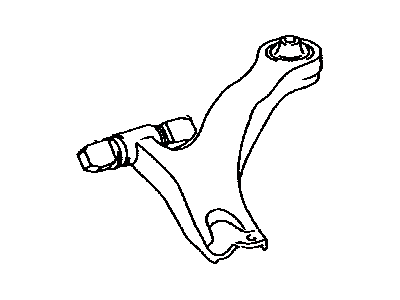
2003 Toyota 4Runner Front Suspension Control Arm Sub-Assembly Lower Right
Part Number: 48068-60010$339.00 MSRP: $486.10You Save: $147.10 (31%)Product Specifications- Other Name: Arm Sub-Assy, Front Suspension, Lower No.1 Rh; Lower Control Arm
- Position: Passenger Side
- Part Name Code: 48068
- Item Weight: 43.20 Pounds
- Item Dimensions: 19.2 x 3.5 x 18.1 inches
- Condition: New
- Fitment Type: Direct Replacement
- SKU: 48068-60010
- Warranty: This genuine Toyota part is covered by warranty.

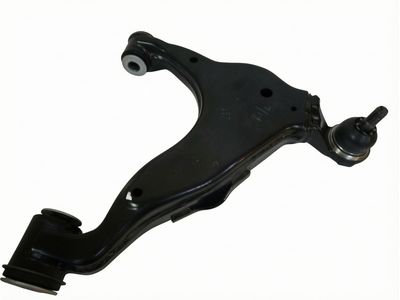
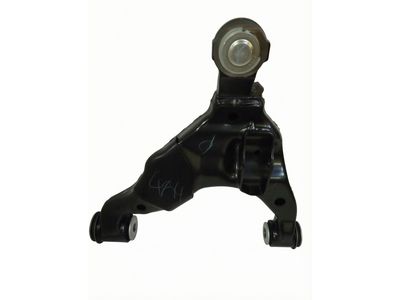
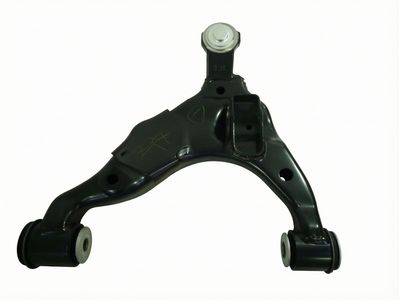
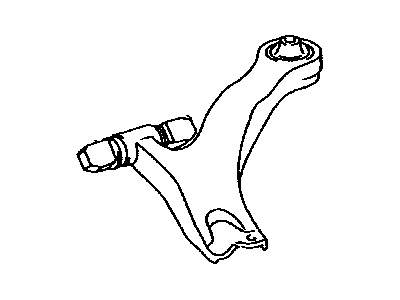
2003 Toyota 4Runner Front Suspension Control Arm Sub-Assembly Lower Left
Part Number: 48069-60010$335.33 MSRP: $500.24You Save: $164.91 (33%)Product Specifications- Other Name: Arm Sub-Assy, Front Suspension, Lower No.1 Lh; Lower Control Arm
- Position: Lower Driver Side
- Part Name Code: 48069
- Item Weight: 42.40 Pounds
- Item Dimensions: 21.0 x 16.6 x 18.0 inches
- Condition: New
- Fitment Type: Direct Replacement
- SKU: 48069-60010
- Warranty: This genuine Toyota part is covered by warranty.
2003 Toyota 4Runner Control Arm
With ToyotaPartsDeal.com, you have access to an extensive inventory of genuine 2003 Toyota 4Runner Control Arm, all priced competitively. Feel secure in your purchase, as all our OEM 2003 Toyota 4Runner Control Arm are covered by warranty. Plus, we offer a hassle-free return policy and speedy delivery service.
2003 Toyota 4Runner Control Arm Parts Questions & Experts Answers
- Q:How to remove and install the upper control arm for the 2003 Toyota 4Runner?Posted by Jackson O.A:Loosen the wheel lug nuts, raise the front of the vehicle, and support it securely on jackstands while applying the parking brake before removing the wheel. Disconnect the wheel speed sensor wiring harness and separate it from the upper control arm and steering knuckle. For clearance to remove the upper arm pivot bolt, take off the wire harness bracket, which is mounted where the bracket meets the body. Support the lower control arm with a floor jack, then remove the retaining clip and loosen the upper balljoint nut about 1/4 inch. Use a two-jaw puller or a balljoint separator to detach the balljoint from the steering knuckle, ensuring the steering knuckle does not fall outward to avoid damaging the brake hose; tying it to the coil spring can help prevent this. Remove the nut, washer, and pivot bolt to detach the upper control arm from the frame, being cautious not to damage the splash shields on each side of the control arm, which can be removed by prying out the fasteners if necessary. Inspect the bushings for wear and deterioration, and if they are cracked or damaged, take the arm to an automotive machine shop for new bushings. Installation follows the reverse order of removal, ensuring all suspension fasteners are tightened to the specified torque and using a new retaining clip on the upper control arm balljoint nut. If needed, tighten the balljoint nut further to align the hole in the ballstud with the slots in the nut without loosening it. The pivot bolt nut should be tightened with the vehicle at normal ride height, which can be achieved after lowering the vehicle or by raising the lower control arm with a floor jack. Finally, tighten the lug nuts to the specified torque and consider having the wheel alignment checked and adjusted if necessary.Answered by Toyota Parts Specialist Jerry / Jul 24, 2025
Related 2003 Toyota 4Runner Parts
 2003 Toyota 4Runner Ball Joint
 2003 Toyota 4Runner Coil Springs
 2003 Toyota 4Runner Control Arm Bushing
 2003 Toyota 4Runner Steering Knuckle
 2003 Toyota 4Runner Shift Cable