

My Garage
My Account
Cart
Genuine 2004 Toyota 4Runner Axle Shaft
Car Axle Shaft- Select Vehicle by Model
- Select Vehicle by VIN
Select Vehicle by Model
orMake
Model
Year
Select Vehicle by VIN
For the most accurate results, select vehicle by your VIN (Vehicle Identification Number).
4 Axle Shafts found
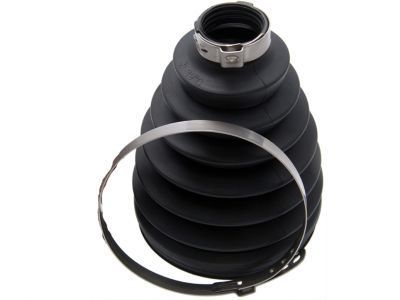
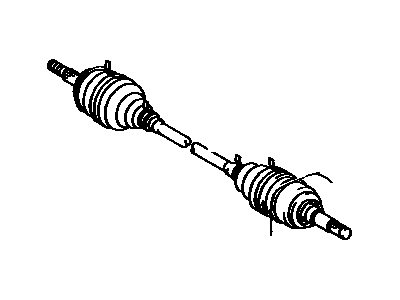
2004 Toyota 4Runner Passenger Front Outer Cv Joint Boot Kit
Part Number: 43430-60060$412.32 MSRP: $615.09You Save: $202.77 (33%)Ships in 1-3 Business DaysProduct Specifications- Other Name: Shaft Assembly, Front Drive, Rh
- Position: Front Outer Passenger Side
- Replaced by: 43430-60062
- Item Weight: 23.00 Pounds
- Item Dimensions: 28.6 x 6.2 x 6.3 inches
- Condition: New
- Fitment Type: Direct Replacement
- SKU: 43430-60060
- Warranty: This genuine Toyota part is covered by warranty.
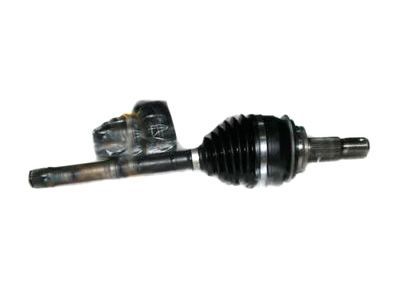

2004 Toyota 4Runner Shaft Assembly Front Drive Outboard Joint Right
Part Number: 43460-69105$325.02 MSRP: $466.05You Save: $141.03 (31%)Product Specifications- Other Name: Shaft Set, Outboard ; Shaft Assembly, Front Drive Outboard Joint, Rh
- Position: Front Passenger Side
- Replaced by: 43460-69255
- Item Weight: 16.60 Pounds
- Item Dimensions: 23.3 x 7.6 x 7.6 inches
- Condition: New
- Fitment Type: Direct Replacement
- SKU: 43460-69105
- Warranty: This genuine Toyota part is covered by warranty.
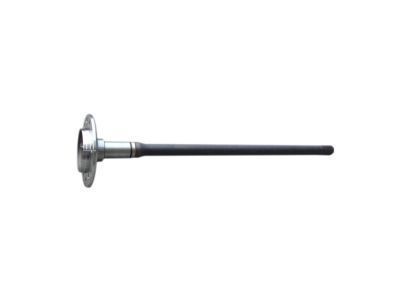
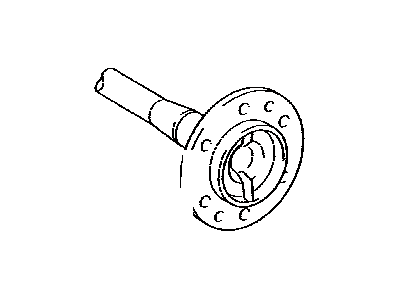
2004 Toyota 4Runner Rear Axle Shaf
Part Number: 42311-60240$488.36 MSRP: $728.53You Save: $240.17 (33%)Ships in 1-3 Business DaysProduct Specifications- Other Name: Shaft, Rear Axle, Lh; Axle Shaft
- Position: Rear
- Item Weight: 16.10 Pounds
- Item Dimensions: 29.3 x 9.0 x 7.8 inches
- Condition: New
- Fitment Type: Direct Replacement
- SKU: 42311-60240
- Warranty: This genuine Toyota part is covered by warranty.
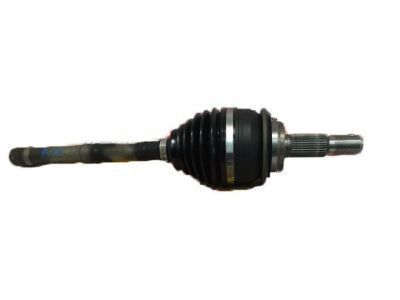
2004 Toyota 4Runner Front Drive Outboard Joint Shaft Assembly Left Hand
Part Number: 43460-69055$223.17 MSRP: $320.02You Save: $96.85 (31%)Ships in 1-3 Business DaysProduct Specifications- Other Name: Shaft Assembly, Front Drive Outboard Joint, Lh
- Position: Front Driver Side
- Replaced by: 43460-69205
- Item Weight: 27.30 Pounds
- Item Dimensions: 10.3 x 4.3 x 4.5 inches
- Condition: New
- Fitment Type: Direct Replacement
- SKU: 43460-69055
- Warranty: This genuine Toyota part is covered by warranty.
2004 Toyota 4Runner Axle Shaft
With ToyotaPartsDeal.com, you have access to an extensive inventory of genuine 2004 Toyota 4Runner Axle Shaft, all priced competitively. Feel secure in your purchase, as all our OEM 2004 Toyota 4Runner Axle Shaft are covered by warranty. Plus, we offer a hassle-free return policy and speedy delivery service.
2004 Toyota 4Runner Axle Shaft Parts Questions & Experts Answers
- Q:What is the description and diagnosis of front axle shaft problems for the 2004 Toyota 4Runner?Posted by Tonie S.A:The rear axle assembly of a vehicle is a hypoid, semi-floating type with a differential that allows the outer rear tire to turn more quickly than the inner tire when going around a corner. The axle shafts are splined to the differential side gears, and the differential pinion gears roll around the slower side gear, driving the outer side gear more quickly. Some models use a locking limited-slip rear axle that allows for normal operation until one wheel loses traction. On 4WD models, a fully independent front axle assembly is used, consisting of a differential and a pair of drive axles with inner and outer constant velocity (CV) joints. When diagnosing axle problems, it's important to check other possible causes before assuming the axle is the problem. Common noises associated with axle diagnosis procedures include road noise, tire noise, and engine and transmission noise, which can be deceiving and travel along the driveline. Overhauling the differential requires special tools and isn't cost-effective for a do-it-yourselfer.Answered by Toyota Parts Specialist Bruce / Sep 09, 2024
Related 2004 Toyota 4Runner Parts
 2004 Toyota 4Runner Wheel Seal
 2004 Toyota 4Runner Wheel Bearing
 2004 Toyota 4Runner Transmission Pan
 2004 Toyota 4Runner Torque Converter
 2004 Toyota 4Runner Slip Yoke
 2004 Toyota 4Runner Input Shaft Bearing
 2004 Toyota 4Runner Output Shaft Bearing
 2004 Toyota 4Runner Pinion Washer