

My Garage
My Account
Cart
Genuine Toyota Land Cruiser Coil Springs
Strut Spring- Select Vehicle by Model
- Select Vehicle by VIN
Select Vehicle by Model
orMake
Model
Year
Select Vehicle by VIN
For the most accurate results, select vehicle by your VIN (Vehicle Identification Number).
40 Coil Springs found
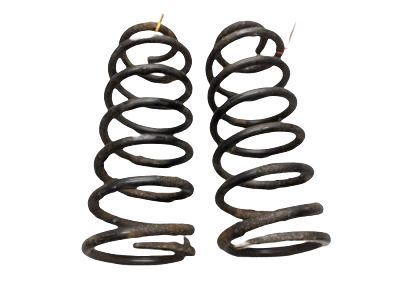
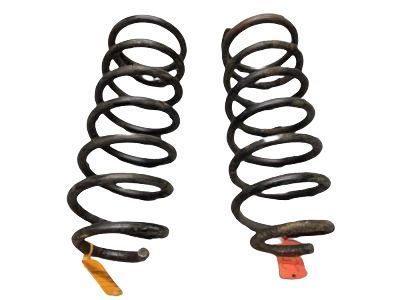
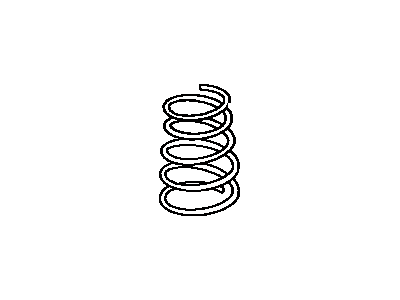
Toyota Land Cruiser Coil Spring Rear
Part Number: 48231-6A690$260.41 MSRP: $373.41You Save: $113.00 (31%)Ships in 1-3 Business Days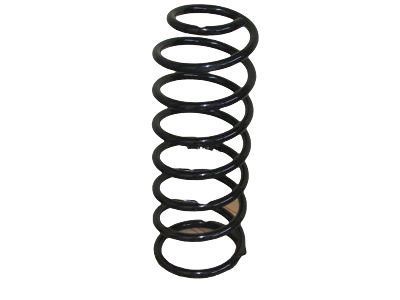
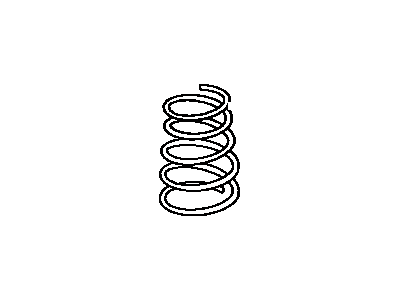
Toyota Land Cruiser Coil Spring Rear
Part Number: 48231-6A680$254.26 MSRP: $364.59You Save: $110.33 (31%)Ships in 1-3 Business Days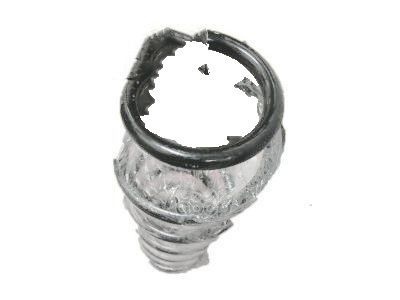
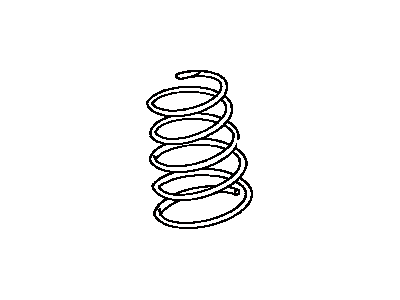
Toyota Land Cruiser Front Coil Spring Left Hand
Part Number: 48131-6A480$171.28 MSRP: $243.50You Save: $72.22 (30%)Ships in 1-3 Business Days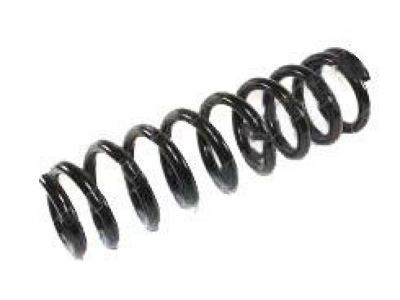
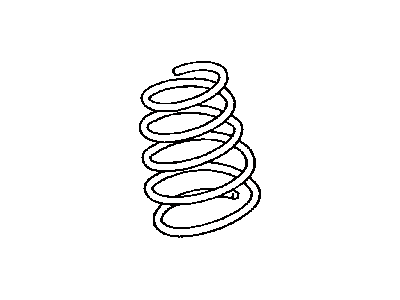
Toyota Land Cruiser Front Coil Spring
Part Number: 48131-60D21$206.00 MSRP: $295.40You Save: $89.40 (31%)Ships in 1-3 Business Days
Toyota Land Cruiser Rear Coil Spring
Part Number: 48231-60F31$174.79 MSRP: $248.49You Save: $73.70 (30%)Ships in 1-3 Business Days
Toyota Land Cruiser Front Coil Spring Left Hand
Part Number: 48131-6A490$171.28 MSRP: $243.50You Save: $72.22 (30%)Ships in 1-3 Business Days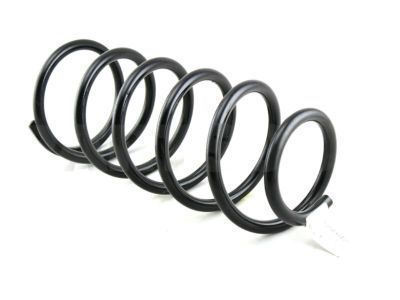
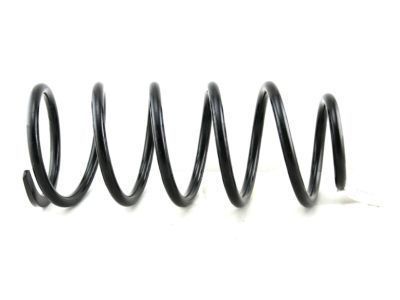
Toyota Land Cruiser Coil Spring Rear
Part Number: 48231-60E20$165.78 MSRP: $235.69You Save: $69.91 (30%)Ships in 1-3 Business Days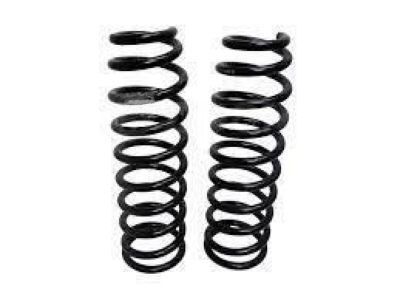
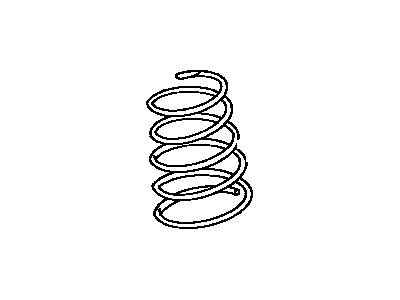
Toyota Land Cruiser Front Coil Spring Right Hand
Part Number: 48131-6A450$154.55 MSRP: $219.71You Save: $65.16 (30%)Ships in 1-3 Business DaysToyota Land Cruiser Spring, Front Coil, RH
Part Number: 48131-6A460$154.55 MSRP: $219.71You Save: $65.16 (30%)Toyota Land Cruiser Front Coil Spring
Part Number: 48131-60C81$166.13 MSRP: $236.18You Save: $70.05 (30%)Ships in 1-3 Business DaysToyota Land Cruiser Rear Coil Spring Right Hand
Part Number: 48231-60F30$174.79 MSRP: $248.49You Save: $73.70 (30%)Ships in 1-3 Business DaysToyota Land Cruiser Front Coil Spring Left Hand
Part Number: 48131-6A470$171.28 MSRP: $243.50You Save: $72.22 (30%)Ships in 1-3 Business DaysToyota Land Cruiser Rear Coil Spring
Part Number: 48231-60E50$174.68 MSRP: $250.48You Save: $75.80 (31%)Ships in 1-3 Business DaysToyota Land Cruiser Rear Coil Spring
Part Number: 48231-60E40$185.47 MSRP: $265.95You Save: $80.48 (31%)Ships in 1-3 Business Days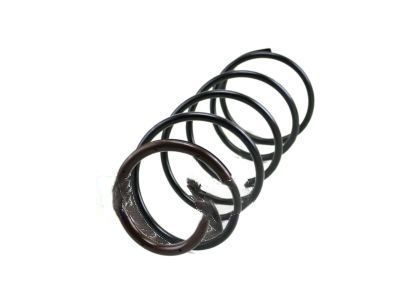
Toyota Land Cruiser Coil Spring Rear
Part Number: 48231-6A770$130.21 MSRP: $185.11You Save: $54.90 (30%)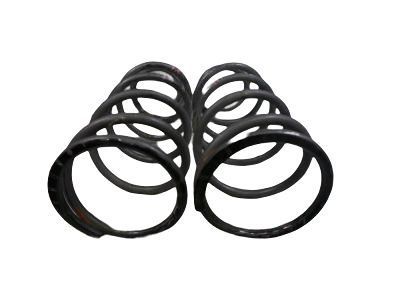
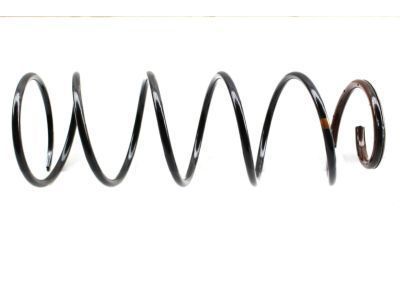
Toyota Land Cruiser Spring, Coil, Rear LH
Part Number: 48231-6A780$140.04 MSRP: $199.09You Save: $59.05 (30%)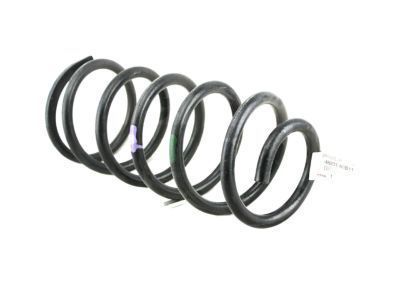
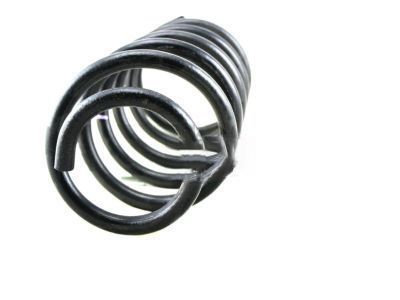
Toyota Land Cruiser Rear Coil Spring
Part Number: 48231-60B11$174.08 MSRP: $247.49You Save: $73.41 (30%)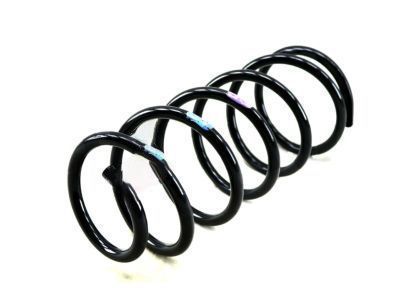
Toyota Land Cruiser Rear Coil Spring
Part Number: 48231-60A20$154.19 MSRP: $219.22You Save: $65.03 (30%)Toyota Land Cruiser Spring, Coil, Front
Part Number: 48131-60D40$177.70 MSRP: $254.81You Save: $77.11 (31%)
| Page 1 of 2 |Next >
1-20 of 40 Results
Toyota Land Cruiser Coil Springs
The Toyota Land Cruiser Coil Springs are responsible for holding the weight of the vehicle and allowing the suspension to react to bumps. This maintains the ride height and stability. The Coil Springs are designed to compress and extend with the impact of road forces. Located on all four wheels of modern-day Toyota Land Cruiser models, with independent front and 4-link rear suspensions, energy is stored in the helical steel and then returns to its natural length to smooth the ride. The two key specifications affecting their performance are free length (the unloaded height) and spring rate (the load needed to compress one inch). Toyota Land Cruiser Coil Springs are produced in different diameters, lengths, and coil counts depending on vehicle needs. A linear rate spring features evenly spaced coils and gives off a constant rate. A progressive spring has coils that tighten at one end, creating a gradually increasing rate. A dual rate spring gives off two distinct rates. Worn Coil Springs can cause sagging, bottoming out, and abnormal tire wear. The Coil Springs on your Toyota Land Cruiser must be functioning properly to maintain the vehicle's intended steering geometry and ground clearance.
If you are in demand for superior quality and affordable OEM Toyota Land Cruiser Coil Springs, then shop with us! We own a wide range of the reduced-priced genuine Toyota Land Cruiser Coil Springs. You can purchase in confidence as all parts come with a manufacturer's warranty. Any issues with our products? No need to worry as we have a hassle-free return policy to guide you every step of the way.
Toyota Land Cruiser Coil Springs Parts Questions & Experts Answers
- Q:How to replace the front and rear coil springs on Toyota Land Cruiser?A:Loosen the front wheel lug nuts, raise the front of the vehicle, and support it securely on jackstands before removing the wheels. Support the axle assembly with either a floor jack under the differential or, preferably, two jacks at each end of the axle for better balance. Unbolt the stabilizer bar end links and the shock absorbers at the front axle housing. Slowly lower the axle assembly until the coil springs are almost fully extended, having an assistant support the right side if using only one jack. Install the spring compressor tool and compress the coil spring enough for removal, ensuring to keep the ends of the spring pointing away from your body. Check the spring for deep nicks and corrosion, replacing it if any questionable conditions are evident. Reinstall the spring compressor tool and compress the new coil spring, guiding the upper end into place and aligning the lower end with the stop in the lower spring seat. The remainder of the installation follows the reverse order of removal, tightening all fasteners to the specified torque. For the rear, loosen the front wheel lug nuts, raise the rear of the vehicle, and support it securely on jackstands before removing the wheels. Support the axle assembly similarly as before and unbolt the stabilizer bar brackets and shock absorbers at the rear axle housing. Remove the lower bolt from the rear track bar and position it out of the way. Slowly lower the axle assembly until the coil springs are fully extended, then grasp the lower end of the spring to remove it from the vehicle, taking care not to damage the rear brake hose. Check the spring for deep nicks and corrosion, replacing it if necessary. Installation is the reverse of removal, ensuring the coil spring is properly seated and tightening all fasteners to the specified torque.
Related Toyota Land Cruiser Parts
 Toyota Land Cruiser Strut Housing
 Toyota Land Cruiser Shock And Strut Mount
 Toyota Land Cruiser Coil Spring Insulator
 Toyota Land Cruiser Bump Stop
 Toyota Land Cruiser Leaf Spring
 Toyota Land Cruiser Leaf Spring Bushing
 Toyota Land Cruiser Rear Crossmember
 Toyota Land Cruiser Front Cross-Member
Browse by Year
2021 Coil Springs 2020 Coil Springs 2019 Coil Springs 2018 Coil Springs 2017 Coil Springs 2016 Coil Springs 2015 Coil Springs 2014 Coil Springs 2013 Coil Springs 2012 Coil Springs 2011 Coil Springs 2010 Coil Springs 2009 Coil Springs 2008 Coil Springs 2007 Coil Springs 2006 Coil Springs 2005 Coil Springs 2004 Coil Springs 2003 Coil Springs 2002 Coil Springs 2001 Coil Springs 2000 Coil Springs 1999 Coil Springs 1998 Coil Springs 1997 Coil Springs 1996 Coil Springs 1995 Coil Springs 1994 Coil Springs 1993 Coil Springs 1992 Coil Springs 1991 Coil Springs