My Garage
My Account
Cart
Genuine Toyota MR2 Brake Booster
Brake Power Booster- Select Vehicle by Model
- Select Vehicle by VIN
Select Vehicle by Model
orMake
Model
Year
Select Vehicle by VIN
For the most accurate results, select vehicle by your VIN (Vehicle Identification Number).
9 Brake Boosters found
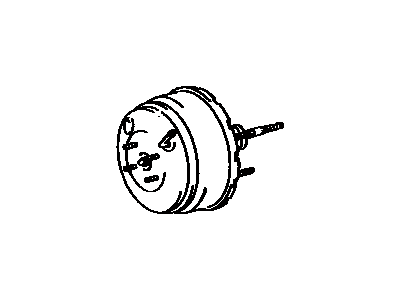
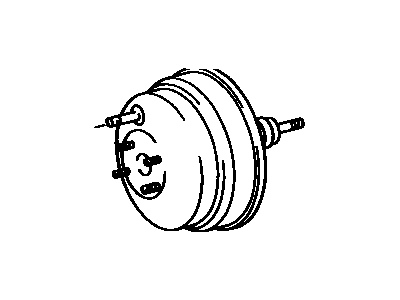
Toyota MR2 Brake Booster
The Toyota MR2 Brake Booster enhance stopping power on the car which helps drivers to halt the vehicle without applying too much effort. Well known among enthusiasts for their durability, this Brake Booster employs sturdy steel housing and a time-tested single vacuum design that won't succumb to fatigue even after years of spirited driving. Thus, the compact sports car can maintain its agile identity. According to the owners, the unit multiplies their foot input before it reaches the master cylinder, which results in shorter reaction time, smoother modulation and less driver fatigue whether commuting or back road running. According to the original data, it appears that the first generation, second generation and subsequent models of the Toyota MR2 will all be compatible to the Brake Booster. Consequently whether the car has pop up headlights or the sleeker targa shape of the nineties, so long as it is an MR2, the same core Brake Booster concept slots in place and restores factory feel. Through using engine vacuum to function rather than complicated electronics, this component increases braking efficiency without the added weight. Furthermore, it helps the balanced mid engine layout that is synonymous with every MR2. Pedal response predictability benefits safety: it helps keep braking distances consistent in an emergency. The integrated check-valve will maintain the necessary pressure differential even if the vacuum supply dips momentarily. This is a small component but nevertheless an important one that sets this Brake Booster apart from others on the parts shelf. Original Toyota part numbers prove the Brake Booster is built to factory specs so every MR2 stays showroom-fresh. The Brake Booster engages to enhance stability while driving the MR2 as proved at Toyota circuits. Toyota's vacuum strategy also contributes to keeping the chassis lightweight. Due to their tough quality material, uncomplicated mechanics and wide-ranging model application, the Toyota MR2 Brake Booster is a favourite for drivers wanting steadfast performance, lap after lap, mile after mile.
If you are in demand for superior quality and affordable OEM Toyota MR2 Brake Booster, then shop with us! We own a wide range of the reduced-priced genuine Toyota MR2 Brake Booster. You can purchase in confidence as all parts come with a manufacturer's warranty. Any issues with our products? No need to worry as we have a hassle-free return policy to guide you every step of the way.
Toyota MR2 Brake Booster Parts Questions & Experts Answers
- Q:What maintenance is required for the brake booster unit on Toyota MR2?Posted by Zaza I.A:The brake booster unit requires no special maintenance apart from periodic inspection of the vacuum hose and the case. Dismantling of the power unit requires special tools and cannot be performed by the home mechanic; if a problem develops, it is recommended to use a new or factory rebuilt unit. Begin by removing the master cylinder and disconnecting the vacuum hose where it attaches to the brake booster using pliers to remove the hose clamp. From the passenger compartment, remove the instrument lower finish panel and air duct, then disconnect the brake pedal return spring and the push rod from the pedal arm. Unscrew the four retaining nuts and withdraw the booster unit from the luggage compartment. Installation is the reverse of the removal procedure, but before assembling the master cylinder to the booster, check the clearance between the back of the piston and the brake push rod. Using a depth micrometer or vernier caliper, measure the distance from the bottom of the piston bore to the master cylinder mounting flange and the distance from the end of the brake pushrod to the surface on the booster assembly that the master cylinder mounting flange contacts when installed. Subtract the two measurements to get the clearance; if it is more or less than specified, turn the adjusting screw on the end of the brake push rod until the clearance is within the specified limit, ensuring to lock the jam nut on the adjusting screw when the adjustment is completed. Upon installation, place the booster into position and tighten the retaining nuts, then connect the brake pedal, install the master cylinder and vacuum hose, and carefully test the operation of the brakes before placing the vehicle in normal operation.Answered by Toyota Parts Specialist Manuel / Nov 19, 2025