

My Garage
My Account
Cart
Genuine Toyota Tercel Thermostat
Engine Coolant Thermostat- Select Vehicle by Model
- Select Vehicle by VIN
Select Vehicle by Model
orMake
Model
Year
Select Vehicle by VIN
For the most accurate results, select vehicle by your VIN (Vehicle Identification Number).
1 Thermostat found
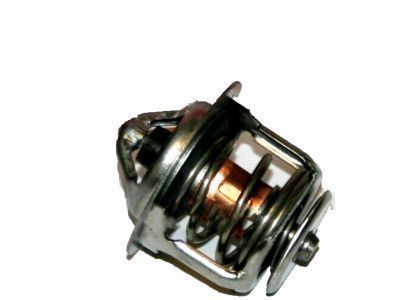
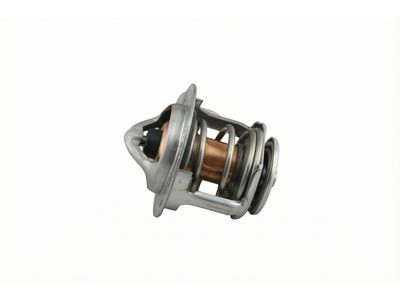
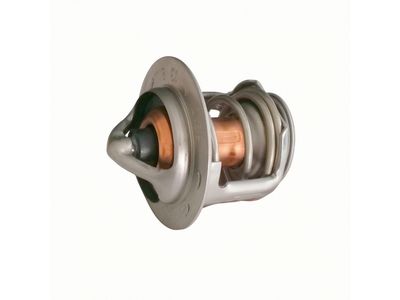
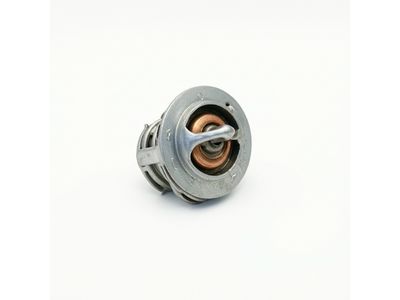
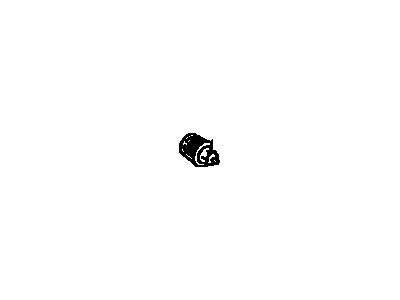
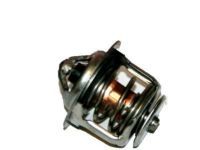
Toyota Tercel Thermostat
Part Number: 90916-03046$25.34 MSRP: $35.41You Save: $10.07 (29%)Ships in 1-3 Business Days
Toyota Tercel Thermostat
The Thermostat in the Toyota Tercel ensures that the small engine operates at its optimal temperature for good power and fuel efficiency. Fitted close to the radiator, this type of Thermostat remains closed as long as the coolant is warming up. Once the wax pellet expands, it pops open to allow flow into the passages and avoid overheating. The design of a wax pellet acts like a very simple mechanical switch. It does not need electronics to speak of, and it reacts quickly. The opening or closure takes place within a tight temperature band. The Tercel compact car never moved to digital or communicating versions over the years, so all factory units use the same bimetal and wax core concept. As the gauge indicates optimal range quickly, drivers feel the benefit, and the Thermostat stops coolant circulation when cold but permits full flow when under load. This helps keep combustion steady. A stuck open Thermostat can cause the engine to run cooler and waste fuel, while a stuck closed Thermostat could cause overheating. Thus, check it periodically, even if you own a Toyota that is basically trouble-free. Calibration of the replacement part guarantees that every Toyota Tercel continues to sip fuel efficiently while the reliable Thermostat guarantees a long life.
If you are in demand for superior quality and affordable OEM Toyota Tercel Thermostat, then shop with us! We own a wide range of the reduced-priced genuine Toyota Tercel Thermostat. You can purchase in confidence as all parts come with a manufacturer's warranty. Any issues with our products? No need to worry as we have a hassle-free return policy to guide you every step of the way.
Toyota Tercel Thermostat Parts Questions & Experts Answers
- Q:How to check and replace a thermostat in a cooling system on Toyota Tercel?Posted by Yvette C.A:Before assuming the thermostat is to blame for a cooling system problem, check the coolant level, drive belt tension, and temperature gauge operation. If the engine takes a long time to warm up, replace the thermostat. Replace the thermostat if the engine runs hot and the lower radiator hose is not hot. Do not drive without a thermostat as it may affect the engine's performance, emissions, and fuel economy. When replacing the thermostat, disconnect the battery cable, drain the cooling system, locate the thermostat housing, detach the hose, and remove the housing cover. Note the air bleed valve position and fit a new gasket over the thermostat. Install the new thermostat correctly, reattach the cover and bolts, securely reconnect the hose, and refill the cooling system. Start the engine and check for leaks and proper thermostat operation.Answered by Toyota Parts Specialist Manuel / Dec 20, 2025
Related Toyota Tercel Parts
 Toyota Tercel Radiator
 Toyota Tercel Water Pump
 Toyota Tercel Thermostat Gasket
 Toyota Tercel Radiator Hose
 Toyota Tercel Thermostat Housing
 Toyota Tercel Water Pump Gasket
 Toyota Tercel Fan Shroud
 Toyota Tercel Fan Motor
 Toyota Tercel Radiator Support
 Toyota Tercel Coolant Reservoir
 Toyota Tercel Fan Blade
Browse by Year
1999 Thermostat 1998 Thermostat 1997 Thermostat 1996 Thermostat 1995 Thermostat 1994 Thermostat 1993 Thermostat 1992 Thermostat 1991 Thermostat 1990 Thermostat 1989 Thermostat 1988 Thermostat 1987 Thermostat 1986 Thermostat 1985 Thermostat 1984 Thermostat 1983 Thermostat 1982 Thermostat 1981 Thermostat 1980 Thermostat