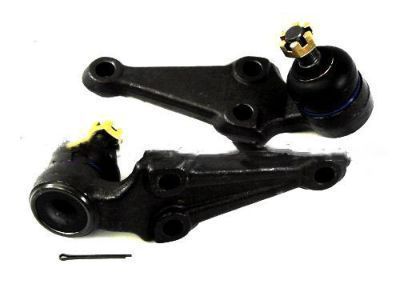
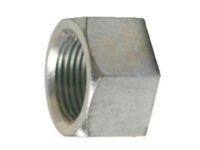
This procedure applies to 1979 through 1986 models only. Obtain the necessary grease, etc. You will also need a grease gun and if your vehicle has plugs in the grease fitting holes, fittings will have to be purchased and installed. Look under the vehicle and locate the ball joint grease fittings or screw plugs (Remove the balljoint screw plug and install a grease fitting (some models have grease fittings installed at the factory)). Remove the plugs with a wrench and thread in the grease fittings. A dealer or auto parts store will be able to supply the correct fittings. Straight, as well as angled, fittings are available. For easier access under the vehicle, raise it with a jack and place jackstands under the frame. Make sure it is securely supported by the stands. If the wheels are to be removed at this interval for rotation or brake inspection, loosen the lug nuts slightly while the vehicle is still on the ground. Before beginning, force a little grease out of the nozzle to remove any dirt from the end of the gun. Wipe the nozzle clean with a rag. With the grease gun and plenty of clean rags, crawl under the vehicle and begin lubricating the fittings. Wipe the balljoint grease fitting nipple clean and push the nozzle firmly over it. Squeeze the trigger on the grease gun to force grease into the component. The balljoints should be lubricated until the rubber seal is firm to the touch. Do not pump too much grease into the fittings as it could rupture the seal. If grease escapes around the grease gun nozzle, the nipple is clogged or the nozzle is not completely seated on the fitting. Resecure the gun nozzle to the fitting and try again. If necessary, replace the fitting with a new one.