

My Garage
My Account
Cart
Genuine 1992 Toyota Land Cruiser Crankshaft Seal
- Select Vehicle by Model
- Select Vehicle by VIN
Select Vehicle by Model
orMake
Model
Year
Select Vehicle by VIN
For the most accurate results, select vehicle by your VIN (Vehicle Identification Number).
3 Crankshaft Seals found


1992 Toyota Land Cruiser Seal
Part Number: 90311-52022$24.03 MSRP: $33.58You Save: $9.55 (29%)Ships in 1-3 Business DaysProduct Specifications- Other Name: Seal, Oil
- Comment: (FOR TIMING CHAIN OR BELT COVER)
- Part Name Code: 11302A
- Item Weight: 0.50 Pounds
- Item Dimensions: 2.2 x 2.2 x 0.5 inches
- Condition: New
- Fitment Type: Direct Replacement
- SKU: 90311-52022
- Warranty: This genuine Toyota part is covered by warranty.

1992 Toyota Land Cruiser Timing Cover Seal
Part Number: 90311-45008$19.98 MSRP: $27.92You Save: $7.94 (29%)Ships in 1-3 Business DaysProduct Specifications- Other Name: Seal, Oil
- Comment: (FOR TIMING CHAIN OR BELT COVER)
- Part Name Code: 11302A
- Item Weight: 0.50 Pounds
- Item Dimensions: 2.2 x 2.2 x 0.5 inches
- Condition: New
- Fitment Type: Direct Replacement
- SKU: 90311-45008
- Warranty: This genuine Toyota part is covered by warranty.
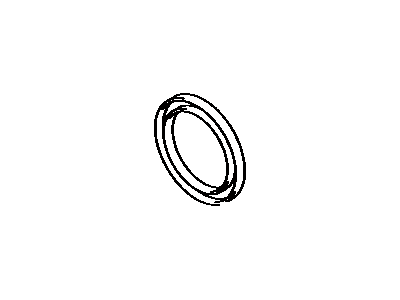
1992 Toyota Land Cruiser Seal
Part Number: 90311-99006$63.71 MSRP: $89.80You Save: $26.09 (30%)Ships in 1-3 Business DaysProduct Specifications- Other Name: Seal, Engine Rear Oil
- Position: Rear
- Replaced by: 90311-99009
- Part Name Code: 11381A
- Item Weight: 0.50 Pounds
- Item Dimensions: 6.0 x 5.9 x 1.6 inches
- Condition: New
- Fitment Type: Direct Replacement
- SKU: 90311-99006
- Warranty: This genuine Toyota part is covered by warranty.
1992 Toyota Land Cruiser Crankshaft Seal
With ToyotaPartsDeal.com, you have access to an extensive inventory of genuine 1992 Toyota Land Cruiser Crankshaft Seal, all priced competitively. Feel secure in your purchase, as all our OEM 1992 Toyota Land Cruiser Crankshaft Seal are covered by warranty. Plus, we offer a hassle-free return policy and speedy delivery service.
1992 Toyota Land Cruiser Crankshaft Seal Parts Questions & Experts Answers
- Q:How to replace the Rear Crankshaft Seal for the 1992 Toyota Land Cruiser?Posted by Alaa F.A:In order to carry out the replacement of the transmission seal, the rear end plate should be taken off first. While the seal can be replaced without removing the oil pan or seal retainer, it is unadvisable to do so since the lip of the seal is fairly stiff and may end up becoming misaligned when being installed. If you want to proceed, try to remove the old seal with the help of the screwdriver, apply moly-base grease on the crankshaft journal and the lip of the new seal, and put into the new seal carefully without trying to do it too fast because it can damage the details. The other method is more recommended whereby the seal retainer is removed and the rear of the oil pan is reshielded. When removing the two rearmost bolts in the oil pan-to-seal retainer, place the putty knife between the oil pan and the seal retainer and loosen the seal as a means of removing the retainer while removing the old gasket material and sealant. Place the seal and retainer assembly between two wooden blocks on a workbench and using a screwdriver expel out the old seal. Place the new crankshaft seal into the retainer by using a wood block or a pipe calendar with a diameter a little less than the diameter of the seal. Using multi-purpose grease, lubricate the crankshaft seal journal and the lip of the new seal being fitted with sealer being applied at the interface of the new gasket and the engine block and a new gasket; apply RTV sealant at the oil pan flange. This seal has a semi-circular area, stiff lip; gradually insert the seal and retainer on the crankshaft with the help of a round and smooth gizmo. Last but not least, the retainer bolt needs to be fastened following the tightening torque sequences, and the total process is done based on the reverse order of the removal process.Answered by Toyota Parts Specialist Ray / Jan 02, 2025
Related 1992 Toyota Land Cruiser Parts
 1992 Toyota Land Cruiser Drain Plug Washer
 1992 Toyota Land Cruiser Drain Plug
 1992 Toyota Land Cruiser Cylinder Head Bolts
 1992 Toyota Land Cruiser Cylinder Head Gasket
 1992 Toyota Land Cruiser Drive Shaft
 1992 Toyota Land Cruiser Dipstick
 1992 Toyota Land Cruiser Crankshaft Pulley
 1992 Toyota Land Cruiser Dipstick Tube
 1992 Toyota Land Cruiser Cylinder Head
 1992 Toyota Land Cruiser Crankshaft Gear
 1992 Toyota Land Cruiser Crankshaft Thrust Washer Set