My Garage
My Account
Cart
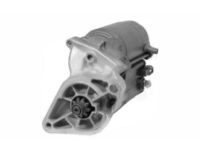
Genuine Toyota MR2 Starter Motor
Starter Ignition- Select Vehicle by Model
- Select Vehicle by VIN
Select Vehicle by Model
orMake
Model
Year
Select Vehicle by VIN
For the most accurate results, select vehicle by your VIN (Vehicle Identification Number).
5 Starter motors found
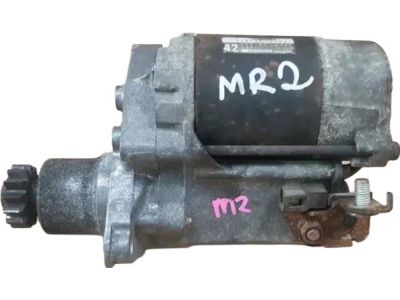
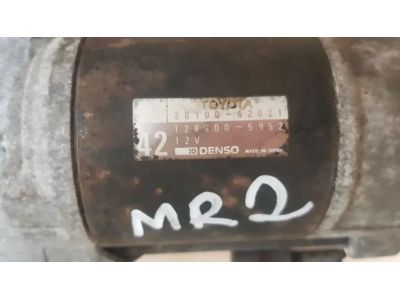
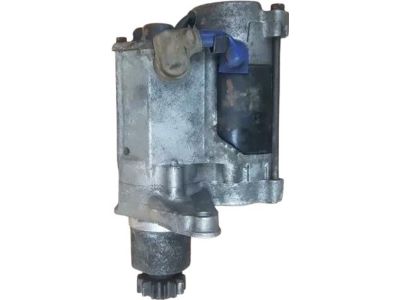
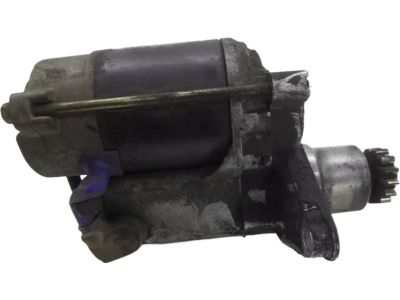
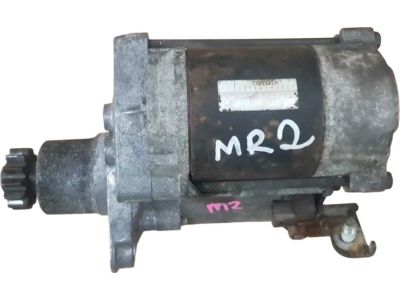
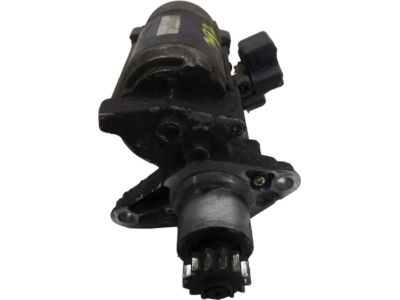
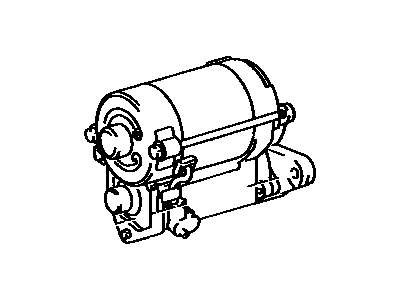
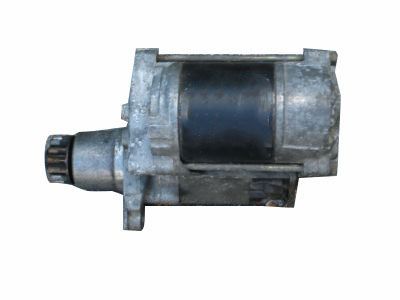
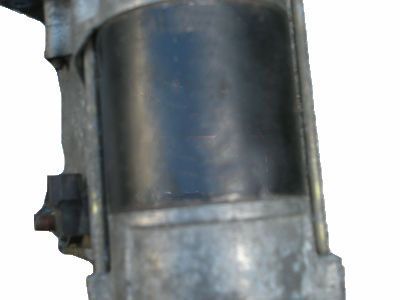
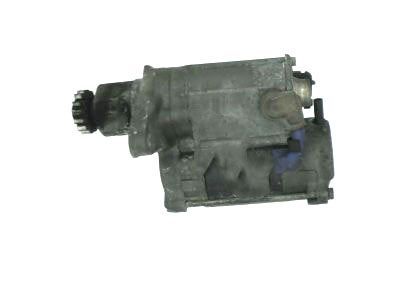
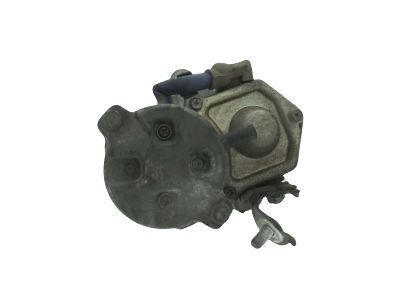
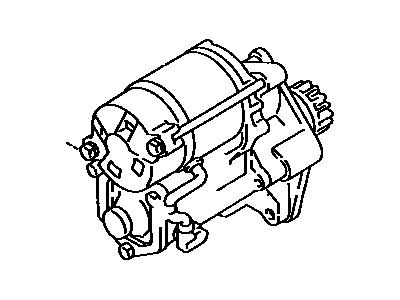
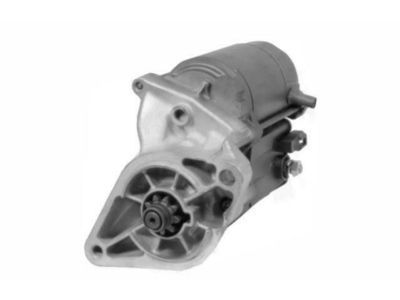
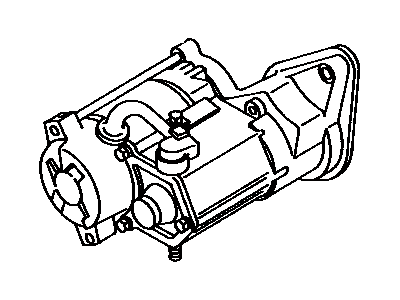
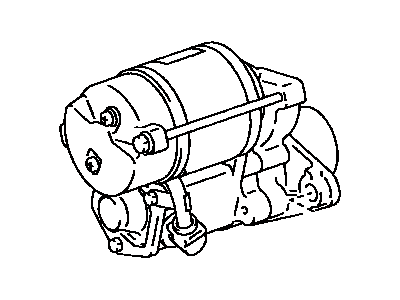
Toyota MR2 Starter Motor
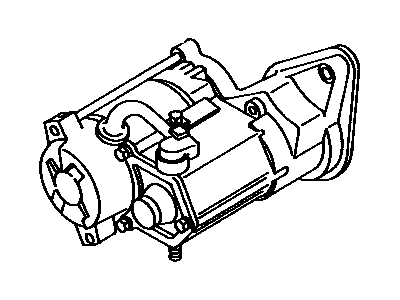
The Starter Motor applied in the Toyota MR2 cranks the engine, thereby enabling the engine to combust. This electric Starter Motor is housed in a compact case that receives high current through heavy gauge wiring and an externally mounted solenoid. Within the Starter Motor, magnetic force spins the armature to turn the starter drive. An overrunning clutch prevents back-drive once the engine fires. When the ignition key is at the start position, the solenoid closes the circuit and pushes the drive pinion toward the engine flywheel or flexplate ring gear, energizing the internal field coils and armature. Some Starter Motors are fitted with an internal reduction gear between the armature and drive to multiply torque yet keep the size reasonable. The spinning core decouples the brush and commutator channel current, while safety switches in either the neutral or clutch circuit block engagement if the vehicle is in gear. The design of the Toyota MR2 Starter Motor allows the Toyota MR2 owner to quickly and repeatedly start the Toyota MR2 engine for reliable MR2 ignition. This demonstrates the robust Toyota electrical engineering that gives life to this unusual Starter Motor vehicle.
If you are in demand for superior quality and affordable OEM Toyota MR2 Starter Motor, then shop with us! We own a wide range of the reduced-priced genuine Toyota MR2 Starter Motor. You can purchase in confidence as all parts come with a manufacturer's warranty. Any issues with our products? No need to worry as we have a hassle-free return policy to guide you every step of the way.
Toyota MR2 Starter Motor Parts Questions & Experts Answers
- Q:What should you check on the Starter Motor before diagnosing problems on Toyota MR2?A:Before diagnosing starter problems, ensure the battery is fully charged. If the starter motor does not turn when the switch is operated, check that the shift lever is in Park for automatic transmissions or that the clutch pedal is depressed for manual transmissions. Verify that the battery is charged and all cables at the battery and Starter Solenoid terminals are secure. If the starter motor spins but the engine does not crank, the overrunning clutch in the starter motor is slipping, necessitating replacement of the starter motor. If the starter motor does not operate at all but the solenoid clicks when the switch is actuated, the issue may be with the battery, the main solenoid contacts, or the starter motor itself. If the solenoid plunger is not audible when the switch is actuated, the solenoid may be defective or the circuit could be open. To test the solenoid, connect a jumper lead between the battery positive terminal and the solenoid terminal; if the starter motor operates, the solenoid is functioning properly, indicating a problem with the ignition switch, neutral start switch, or wiring. If the starter motor still does not operate, remove the starter/solenoid assembly for repair or replacement. If the starter motor cranks the engine slowly, first ensure the battery is charged and all terminal connections are tight; a partially seized engine or incorrect oil viscosity can also cause slow cranking. Run the engine until it reaches normal operating temperature, then disconnect the coil wire from the distributor cap and ground it on the engine. Connect a voltmeter positive lead to the starter motor terminal of the solenoid and the negative lead to ground. Turn the ignition switch to Start and take a voltmeter reading as soon as a steady figure is indicated, avoiding more than 30 seconds of starter motor operation at a time. A reading of 9 volts or more with normal cranking speed is acceptable; if the reading is 9 volts or more but cranking speed is slow, the motor is faulty. If the reading is less than 9 volts and cranking speed is slow, the solenoid contacts may be burned.